Golf instruction is no longer a single format. A golf class might mean a private lesson on the driving range, a beginner group session, or a junior clinic built around short games. The National Golf Foundation’s 2024 Golf Participation Report counted 28.1 million U.S. on-course golfers that year, with 47.2 million people participating when off-course golf was included. That broad audience has different needs, from making first contact with a ball to improving a reliable tee shot.
The right class depends on the player, the setting, and the kind of feedback available. Private coaching can focus on one swing at a time; group lessons add practice with others and often cost less. Short-game clinics concentrate on chips and putts, while on-course instruction brings decisions into real holes. Junior programs and indoor simulator classes serve different schedules and goals. Small details matter: a coach watching your grip, a basket of range balls, or a putt rolling across a practice green can shape the lesson. The PGA of America’s Get Golf Ready program also reflects the industry’s emphasis on accessible, beginner-friendly instruction. Still, a tidy list can mislead. A class that suits a confident adult may overwhelm a new player, and a popular format is not automatically the best fit. Comparing class types means looking at coaching time, group size, practice conditions, and what students actually learn.
Private golf lessons suit players who want instruction tailored to their swing, goals, and experience. A coach can watch your setup, ball position, and tempo, then focus on one or two changes rather than offering a crowded list of fixes. Small details matter. For example, a slight grip adjustment may change the clubface at impact, but it can feel strange for several practice sessions.
The National Golf Foundation reported 26.6 million on-course golfers in the United States in 2023. That figure describes participation, not proof that lessons lower scores. Still, it shows how many people share courses and practice spaces, where individual feedback can help address a specific challenge. Before booking, ask the instructor how progress is assessed and whether the lesson includes time to hit balls. Bring a few recent shots or a clear goal, such as improving contact with mid-irons.
A private session should leave room for questions and practical drills you can repeat alone. A qualified instructor may use video or launch-monitor readings, but numbers need context; one unusual swing is not a diagnosis. One lesson may not change your game. That can feel awkward. Improvement usually takes practice, and a useful coach will explain what to work on between sessions. Be honest about what feels uncomfortable, too; a technically sound change may need adjustment to fit your body and routine.

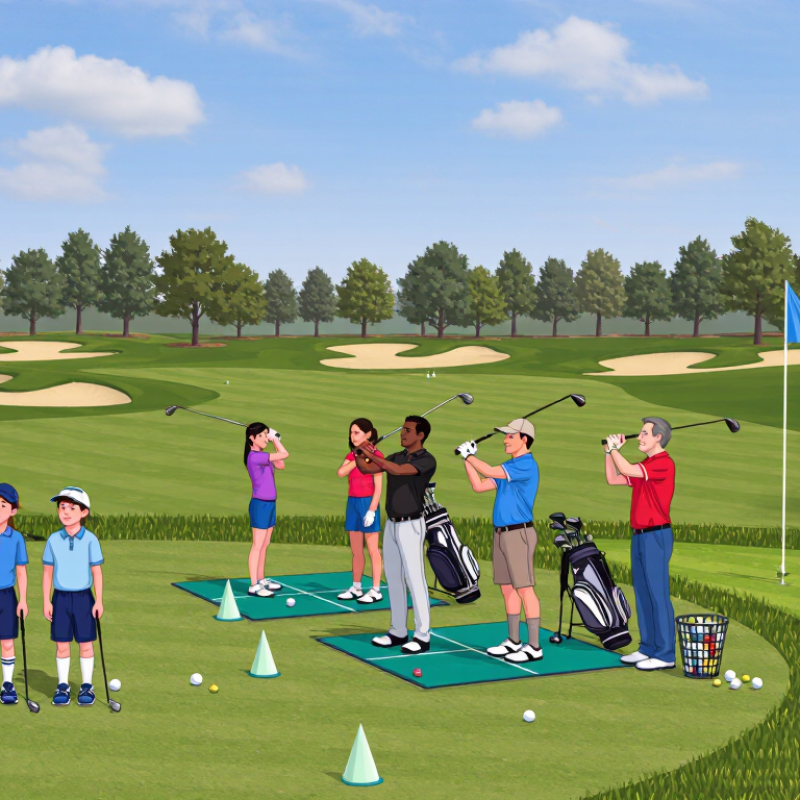
Group golf classes make practice social, but their value comes from focused feedback, not simply sharing a range. The National Golf Foundation’s 2024 Golf Industry Report estimated 26.6 million U.S. on-course golfers in 2023, alongside 18.4 million off-course-only participants. That scale shows golf attracts learners in varied settings; it does not prove group lessons outperform private coaching. A useful class keeps groups small enough for the instructor to spot a grip that slips or a stance that narrows under pressure.
Shared drills let players watch different solutions to the same problem. One golfer may improve contact by slowing the backswing; another may need better balance. A coach can explain the distinction, then give each person a short practice target. Waiting between turns can also invite honest comparison. The rhythm is not always tidy, and louder students may take more attention. Good instructors rotate feedback and make room for quieter questions. Bring one specific goal, such as hitting a consistent low point, rather than trying to rebuild your whole swing.
Tips: Arrive early and tell the instructor about your experience level or any physical limitations. Mark your own balls, take brief notes, and leave space between swings. Ask for one adjustment at a time. If a drill feels confusing, say so; confusion is useful information.
Beginner golf classes should make the first swings feel manageable, not perfect. A good introductory session covers grip, posture, alignment, and a balanced finish. Instructors can then introduce putting and short chips before asking new players to hit full shots. Small groups leave room for individual feedback. Ask whether equipment is included and whether lessons take place on a practice area or course.
The National Golf Foundation reported that 3.4 million people in the United States played golf on a course for the first time in 2023. That steady flow of newcomers makes patient instruction important. For a first class, look for clear demonstrations, simple drills, and time to repeat each movement. A beginner should leave knowing one or two adjustments to practise, rather than a dozen technical terms. Keep it simple.
Some awkward shots are part of learning. Progress can feel uneven, especially when a new grip changes familiar habits. That can be frustrating. A helpful instructor explains what went wrong without making every miss seem like a crisis. Before booking, consider class size, lesson length, and whether the pace suits your comfort level. The right starting class gives beginners room to ask basic questions—and to make mistakes safely.
| Class type | Typical format | Main focus | Good fit for |
|---|---|---|---|
| Beginner group lessons | Small group; often 45–90 minutes per session | Grip, stance, basic swing, putting, and golf etiquette | New players who want structured instruction and a social setting |
| Private lessons | One player with an instructor; commonly 30–60 minutes | Individual feedback on fundamentals, swing motion, and practice habits | Players who prefer personal attention or want to learn at their own pace |
| Multi-week beginner programs | A series of scheduled sessions, often once a week | Progressive practice of full swing, short game, rules, and course readiness | New golfers who benefit from regular practice and a step-by-step plan |
| Short-game clinics | Group practice focused on putting, chipping, and pitching | Distance control, contact, setup, and choosing a suitable shot | Beginners who want to build confidence around the green |
| On-course playing lessons | Instruction during play on a golf course, usually in a small group | Club selection, course etiquette, pace of play, and basic strategy | Learners who know basic shots and are preparing to play on a course |
| Introductory golf workshops | One-time or short-format session with guided practice | An introduction to equipment, basic techniques, and how lessons work | Curious first-timers who want to try golf before committing to a course |
Junior golf classes work best when instruction matches a child’s age, attention span, and comfort level. A beginner might start with a soft practice ball, a short club, and a simple target, such as a cone ten steps away. Coaches can teach grip, stance, and safe club handling through short demonstrations and playful drills. Small groups also give children room to try without feeling watched by a crowd. Progress is rarely neat; some days, a child may only want to putt.
Tips: Choose classes with clear safety rules and frequent breaks. Ask how coaches adapt activities for different skill levels. Bring water, comfortable shoes, and clubs sized for the learner, if available. Keep practice brief. Praise effort, not just distance or accuracy.
Parents can help by asking what felt fun or difficult after class, rather than testing a child’s swing on the way home. A coach should offer specific, calm feedback and allow time for repetition. Young learners often benefit from simple goals, like making three gentle putts or finishing a balance drill. Some activities may not click right away, and that is useful information, not failure. If a child seems tense, a quieter drill or a short pause may help them rejoin with more confidence.
Specialized Golf Clinics for Targeted Skills
Specialized golf clinics focus on one part of the game, such as putting, wedge shots, driving, or bunker play. In a putting clinic, players might practice from three, six, and nine feet on a real green. A coach can observe stance, face alignment, and speed control, then offer a specific adjustment. Small groups leave more room for individual feedback. Still, a single session cannot fix every habit.
Tips: Bring one clear goal, such as starting putts on line. Ask the coach what to practice between sessions. A few focused repetitions are often more useful than rushing through a large basket of balls.
Clinics can also target course decisions, including club selection and approach-shot planning. These sessions may use a practice hole or simulated scenarios, helping players connect technique with real choices. Look for instruction that includes demonstrations, time to practice, and feedback suited to your skill level. Progress may feel uneven: a new grip or setup can make familiar shots feel strange at first. Keep notes on one or two useful cues, and revisit them during later practice.
© 2022-2025 Pelican Lakes Resort & Golf, All rights reserved | Privacy Policy
BROUGHT TO YOU BY THE WATER VALLEY COMPANY