Top 10 Golf Club Manufacturers in the World?
Choosing a golf club manufacturer is about more than a famous logo. The right brand can shape how a player feels at address, hears a strike, and controls distance across the course. Small details matter: a shaft’s weight, the grip’s texture, and how the clubhead sits behind the ball. They are easy to overlook in a product photo.
This guide introduces ten prominent golf club manufacturers and the qualities that distinguish their equipment. It considers product range, design approach, materials, fitting options, and reputation among players and professionals. A well-known name may offer extensive choices, but that does not guarantee a perfect fit. Not even close. The best the golf club for one golfer may feel awkward to another, especially when swing speed, experience, and preferred trajectory differ. Comparing brands is useful, though rankings can never capture every player’s needs. Some evaluations also depend on available product information and changing models, so treat the list as a starting point, not a final verdict. Try clubs when possible, and pay attention to consistent contact rather than appearance alone. A sleek finish can be persuasive; a repeatable shot is more convincing. There is no single winner for everyone. That is worth remembering.
Global Market Scope: R&A Reports 61 Million On-Course Golfers in 146 Countries
The R&A reports 61 million on-course golfers across 146 countries, a figure that gives the golf equipment market a genuinely global scale. It counts people who play on courses, not everyone who follows golf or uses a practice range. That distinction matters. The number suggests broad participation, but it does not reveal how often people play, what they spend, or which clubs they need.
For manufacturers, this spread means serving golfers with different abilities, budgets, and playing conditions. A lightweight set may suit a beginner carrying clubs over a hilly course; a more adjustable design may help an experienced player refine ball flight. Heat, humidity, and storage habits can also affect grip comfort and equipment care. Practical details count. Still, a global total can make the market look tidier than it is. Participation does not translate directly into sales, and the 61 million figure alone cannot rank manufacturers. Any “top 10” comparison needs clear criteria, such as product range, distribution, durability, and independent performance testing, alongside careful use of participation data.
Global On-Course Golf Participation
The R&A reports 61 million on-course golfers across 146 countries.
Global estimate of on-course golfers. Source: The R&A.
Ranking the Top 10: Product Range, Tour Presence, Innovation, and Fitting
A credible ranking of the world’s leading golf club manufacturers should look beyond advertising and tournament visibility. Product range matters: a complete lineup may include drivers, fairway woods, hybrids, irons, wedges, and putters. Still, more options do not automatically mean better equipment. The important question is whether golfers can find useful choices for different swing speeds and skill levels.
Tour presence offers a visible measure of professional trust, but it is not a direct test of everyday performance. Players often receive custom-built equipment and extensive support. Innovation deserves similar scrutiny. Adjustable weights and new face designs sound impressive, yet their value depends on measurable results, not novelty alone. Small gains count.
Fitting should carry substantial weight in any top-ten comparison. A careful session checks shaft length, flex, lie angle, grip size, and launch data. Those details can change how a club performs more than a headline feature. A good fitter also listens when a golfer says a club feels awkward. That judgment is not perfectly objective. Ranking manufacturers is imperfect, too, because product quality and fitting access can vary by region and year. A fair assessment should explain its criteria and revisit them as equipment changes.
The 14-Club Limit: Drivers, Irons, Wedges, and Putters Compared
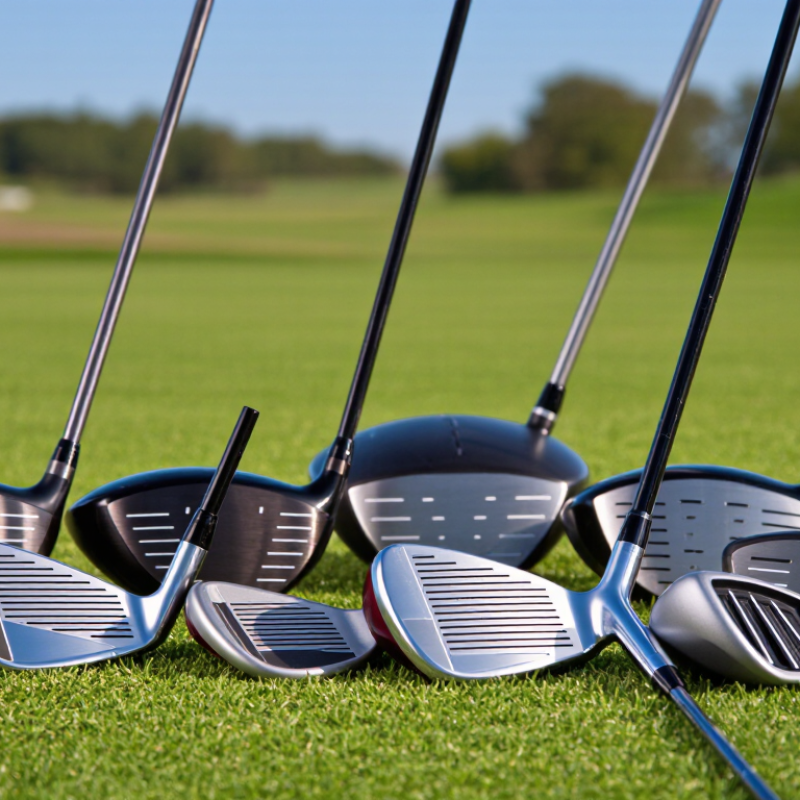
Standard Rules of Golf allow a player to carry up to 14 clubs, but the limit is a ceiling, not a required shopping list. A driver is built for long tee shots, yet its large head and low loft can make accuracy harder when the fairway narrows. Fairway woods and hybrids offer different trade-offs: they can launch the ball more easily from the turf, though distance and feel vary by player. The best choice is the club you can use confidently, not the one that looks most impressive.
Irons cover a wide range of approach shots. Longer irons usually send the ball farther, while shorter irons offer more control into the green. Wedges add loft for pitches, bunker shots, and delicate chips; their sole shape and bounce matter on firm ground or soft sand. A putter is designed for the green, where a small change in pace can decide the hole. Feel matters. A practical set might include several irons, a few wedges, and one putter, with the remaining places matched to common course conditions. It is easy to overpack clubs and still lack the right shot. That is worth reconsidering.
Top 10 Golf Club Manufacturers in the World? - The 14-Club Limit: Drivers, Irons, Wedges, and Putters Compared
| Club Type |
Example Bag Quantity |
Typical Loft Range |
Primary Use |
Example Bag Count |
| Driver |
1 |
About 8°–12° |
Long tee shots; designed to launch the ball with distance. |
1 |
| Fairway Woods |
2 |
About 13°–19° |
Long shots from the tee or fairway; higher-numbered woods generally have more loft. |
2 |
| Hybrid |
1 |
About 18°–27° |
Versatile long-distance club that can be used from the fairway or rough. |
1 |
| Long Iron |
1 |
About 20°–25° |
Lower, longer shots; may be replaced by a hybrid or fairway wood. |
1 |
| Mid Irons |
2 |
About 26°–34° |
Approach shots and controlled distance play from the fairway. |
2 |
| Short Irons |
2 |
About 35°–43° |
More lofted approach shots where control and accuracy are priorities. |
2 |
| Pitching Wedge |
1 |
About 43°–48° |
Short approach shots and lower-lofted shots around the green. |
1 |
| Gap and Sand Wedges |
2 |
About 48°–56° |
Gap wedge fills a distance gap; sand wedge is commonly used from bunkers and for short shots. |
2 |
| Lob Wedge |
1 |
About 58°–64° |
High, short shots, often used when a quick stop or obstacle clearance is needed. |
1 |
| Putter |
1 |
Typically about 2°–5° |
Used primarily to roll the ball on the putting green. |
1 |
| Example bag total — the Rules of Golf permit a maximum of 14 clubs during a round. |
14 |
Loft ranges are approximate examples, not fixed standards; specifications vary by club design. Players may choose different combinations, provided they do not carry more than 14 clubs.
USGA–R&A Equipment Rules: How Club Designs Meet Conformance Standards
For golf-club manufacturers, conformance begins with measurable limits. The USGA–R&A Equipment Rules set a nominal 460 cm³ maximum clubhead volume, with a 10 cm³ measurement tolerance. Club length is generally limited to 48 inches. The rules also regulate face performance: the characteristic-time test uses a 239-microsecond limit, subject to the stated testing tolerance. Numbers matter. In practice, designers must check prototypes and production samples, not just drawings. Face thickness, internal weighting, and head shape can all affect test results.
The joint 2020 Distance Insights Report documented roughly 30 yards of increased average driving distance on the leading men’s professional tour since 1990. That history helps explain why equipment rules scrutinize performance as well as dimensions. Loft, shaft length, face response, and mass distribution interact; changing one can alter the feel or flight of a club. Not always obvious. A design may pass one measurement and still need adjustment after testing. The standards create a shared technical baseline, but applying them to real designs takes careful measurement and occasional reconsideration. I find the limits clear on paper; their design trade-offs are less tidy.
Manufacturer Profiles: Flagship Models, Materials, and Custom-Fit Options
A useful top-ten comparison looks beyond reputation. Each manufacturer profile should identify a flagship model and explain its intended player. A compact cavity-back iron may suit golfers who want precise distance control. A hollow-body design often adds launch and forgiveness. Driver heads commonly use titanium or composite crowns to manage weight. Some irons combine forged steel with tungsten weighting. Materials matter, but they do not guarantee better scores.
Custom fitting turns those details into practical choices. A fitter can test shaft length, flex, lie angle, grip size, and loft. Watch the ball flight. A launch monitor can show carry distance and spin, while impact marks reveal where strikes land. Even a small lie-angle change may shift shots left or right. Results depend on the golfer, not just the club.
Profiles should also note available head shapes, shaft options, and fitting services. Some makers offer broad adjustments; others provide fewer stock combinations. Ask whether testing uses the exact shaft and head being considered. That detail is easy to miss. I would not rank clubs by materials alone; I have seen impressive specifications distract from a poor fit. A top model may feel awkward in one player’s hands and dependable in another’s.