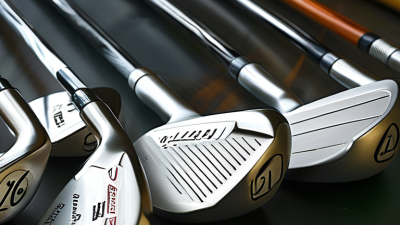
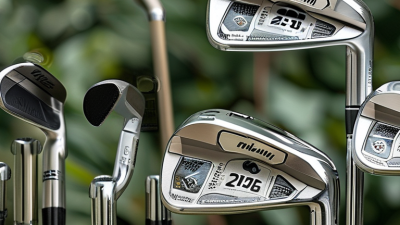
Top 10 Golf Club Manufacturers in China for Global Buyers
Choosing a golf club manufacturer in China takes more than comparing unit prices. Global buyers need evidence of consistent production, clear communication, dependable quality checks, and realistic lead times. A polished catalog helps, but it cannot show how a factory handles a late design change or a rejected batch. Those details matter.
Golf legend Arnold Palmer once said, “Golf is deceptively simple and endlessly complicated.” His observation is useful here: a club may look straightforward, yet its materials, weight, tolerances, and feel shape the playing experience. Buyers should ask about head and shaft options, custom specifications, sample approval, inspection procedures, and production capacity. Specific answers are more useful than broad promises.
This guide introduces ten Chinese manufacturers for global buyers and offers a practical starting point for comparison. It considers product range, manufacturing capabilities, customization, communication, and export experience. The list should not replace independent checks. Request current certifications where relevant, review samples, confirm specifications in writing, and speak directly with the supplier about quality control. A factory visit can reveal useful details, too, though not every buyer can make one. No profile captures every production risk. Some information may change, and a strong website is not proof of consistent output. Treat each company as a candidate, then verify what matters to your own order.
China’s Golf Club Manufacturing Industry and Its Global Role
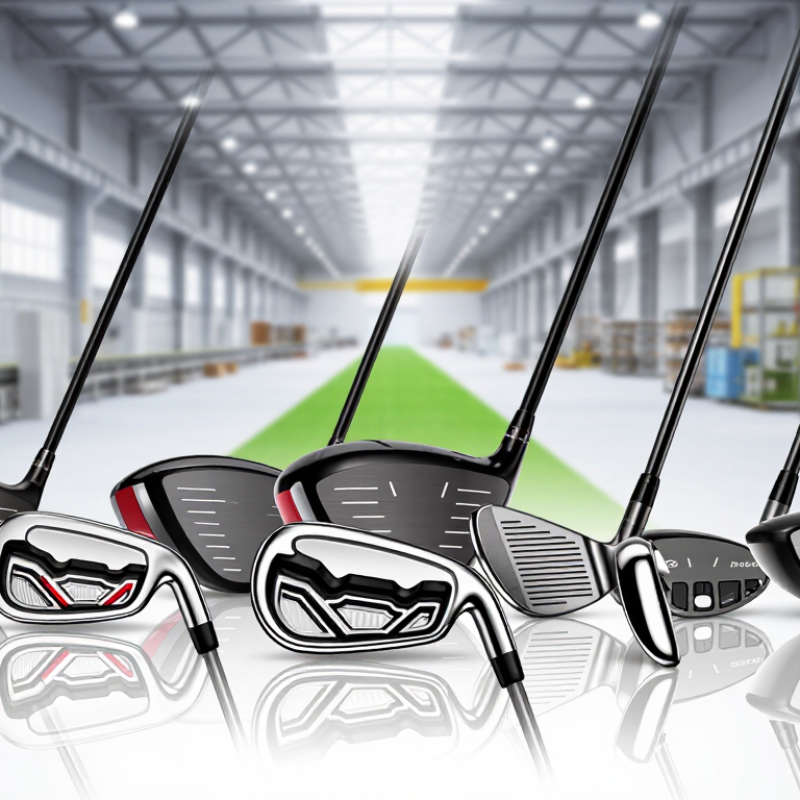
China’s golf club manufacturing industry serves a global market through a mix of component suppliers, specialist workshops, and larger production facilities. Its role extends beyond assembling finished clubs. Factories may machine metal heads, mold polymer components, shape shafts, and coordinate finishing under one roof or across nearby suppliers. That concentration can help buyers manage costs and production schedules. It does not guarantee consistent quality.
A club’s performance depends on details that are easy to overlook: head weight, shaft alignment, grip fit, and the finish around the hosel. Reliable manufacturers use documented specifications and repeatable checks, such as weighing sample heads and inspecting shaft straightness. Ask how prototypes are approved and how production changes are recorded. Small differences matter.
For international buyers, the industry offers options for custom specifications, private-label production, and varied order volumes. Clear drawings, agreed tolerances, and sample testing make collaboration more practical. Export experience can also help with packaging, shipping documents, and delivery planning. Still, communication may falter when technical terms are vague or revisions arrive late. That happens. Buyers should verify claims with samples, inspection records, and direct discussions with the production team, rather than relying on polished presentations alone.
How to Evaluate Chinese Golf Club Manufacturers
Evaluating Chinese golf club manufacturers requires more than comparing quoted prices. Ask for a detailed specification sheet covering head material, shaft options, grip dimensions, finish, and stated tolerances. Request a production sample that matches the proposed order, then inspect its weight, balance, alignment, and surface quality. Small inconsistencies matter. They can affect feel across a full set. Check how the factory records inspections and handles rejected components. Clear records are more useful than broad promises.
Tips: Send the same written requirements to each supplier. Ask for sample lead time, minimum order quantity, quality-control checkpoints, and packaging details. Confirm who pays for sample revisions. Keep approved specifications and changes in writing.
A video call can help you see work areas and ask direct questions, but it cannot replace independent verification. Consider a third-party inspection before shipment, especially for a first order. Communication is part of quality, too. Notice whether answers address measurements and process steps, or stay vague. One imperfect sample is not always a reason to walk away; the important question is whether the manufacturer identifies the cause and corrects it consistently. Allow time for revisions, since rushing approval may leave costly details unresolved.
Profiles of 10 Golf Club Manufacturers in China
China’s golf-club supply base includes specialists in forging, casting, machining, assembly, and custom orders. These ten profiles describe supplier types buyers can investigate, rather than making unsupported claims about named factories. The R&A’s 2023 Global Golf Participation Report estimated 108 million on- and off-course golfers across 146 countries, a broad market that calls for varied equipment and production capabilities.
A Guangdong forging specialist may offer close control over iron-head shaping; a coastal casting workshop may focus on stainless-steel heads. A CNC-focused factory can handle precise hosel and face work. A shaft producer may supply graphite or steel options. An assembly plant joins heads, shafts, and grips to buyer specifications. A small-batch workshop suits sampling, though capacity needs checking. An OEM-oriented supplier may support private-label production. A putter specialist can provide milling and balance options. A grip maker may offer different textures and sizes. An integrated factory can coordinate several stages under one roof.
These profiles are starting points, not quality guarantees. Ask for material specifications, production samples, inspection records, and clear defect-handling terms. Check that sample tolerances match bulk orders. A polished sample is not proof of consistent production. Factory visits or independent audits can reveal details a catalogue misses, such as tool wear, storage conditions, and how rejected parts are handled.
Manufacturing Capabilities, Product Types, and Quality Standards
Global buyers comparing golf club manufacturers in China should examine production capabilities, not just product photographs. A factory may handle head casting or forging, CNC finishing, heat treatment, painting, and final assembly. Its actual scope can vary. Ask which steps happen in-house and which are subcontracted. Details matter. Product ranges may include drivers, fairway woods, irons, wedges, putters, shafts, and grips. Confirm whether the supplier can control clubhead weight, loft, lie angle, and shaft options across repeat orders. A polished sample alone cannot prove consistent production.
Quality checks should match the product and buyer’s specifications. Request inspection records for dimensions, finish, materials, and assembly, plus sample tests where relevant. An ISO 9001 certificate can indicate a documented quality system, but verify its scope and validity rather than treating it as a guarantee. Material traceability and clear procedures for handling defects also matter. Before a large order, compare a production sample with the approved specification. Small differences in feel or balance can affect play. They are easy to overlook. Custom designs and small runs may be available, though tooling costs, minimum quantities, and lead times should be confirmed in writing. Even a careful process can miss something; independent checks may be worthwhile.
Golf Club Manufacturers in China for Global Buyers: Material Density Comparison
Typical densities are approximately 2.7 g/cm³ for aluminum, 4.5 g/cm³ for titanium, and 7.9 g/cm³ for stainless steel. These reference values illustrate material trade-offs relevant to club design; actual alloy properties vary, and manufacturers may use different materials across club heads, shafts, and other components. For buyer evaluation, confirm product specifications and applicable golf-equipment rules, and assess quality-management processes such as ISO 9001 certification where relevant.
Export Services and Sourcing Considerations for Global Buyers
Global buyers should compare more than unit prices when sourcing from China. The R&A’s 2021 Golf Around the World report counted 38,081 golf courses across 206 countries. That wide market calls for different club specifications, packaging, and price points. China ranked 19th in the World Bank’s 2023 Logistics Performance Index, scoring 3.7 out of 5. Still, a strong logistics score cannot promise a factory’s shipment date. Ask for production capacity, export experience, and recent lead-time records.
A useful export service should cover prototypes, inspection, secure packaging, and clear shipping documents. Set measurable checks for clubhead weight, loft, lie angle, shaft flex, grip size, and finish. Samples are not proof. Require an approved reference sample, then inspect production units against it. Confirm carton dimensions and protection; a dented clubhead can turn a good order into a costly dispute. Pilot cartons before ordering at scale. Recheck every lot. Factory visits and third-party inspections can reveal gaps, but neither guarantees consistency. One detail is easy to miss: specifications often change between sample approval and mass production. Put the final tolerances and packing instructions in writing.