What Is a 20cm Doll Plush?
What does “20cm Doll Plush” mean in practice? It usually describes a soft doll measuring about 20 centimeters, often from the top of its head to the bottom of its body. That is roughly the length of a small ruler. The label sounds precise. Still, measuring methods can vary. One seller may measure the doll sitting upright, while another may include its hat, ears, or other raised details. Small differences can affect how the plush fits in a display, pouch, or doll outfit. Checking the product’s measurement notes and photos can help set realistic expectations.
Size is only one part of choosing a plush. Fabric texture, stitching, stuffing, and removable accessories also shape its look and feel. A close-up photo may reveal seams or surface details that a front-facing image hides. For collectors, a 20cm Doll Plush can be convenient to display or carry, though clothing and accessories may not fit every doll of the same stated height. For younger users, check the maker’s age guidance and care instructions, especially if small accessories are included. Details matter. Plush toys can also vary in firmness and finish, even within one product range. This guide explains common measurements, materials, uses, and care considerations, while noting where product labels may leave room for interpretation.
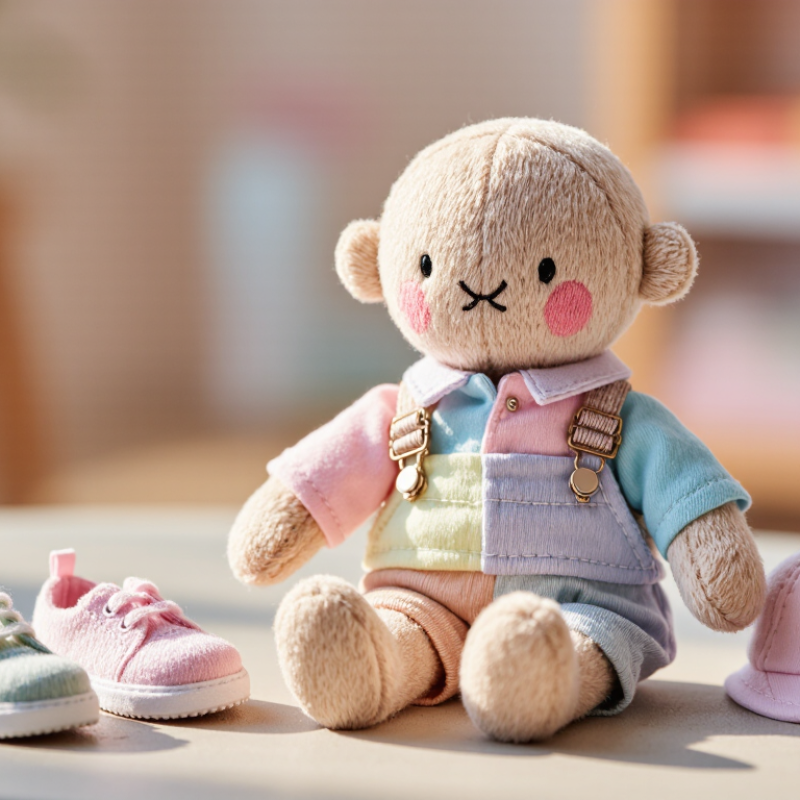
Defining a 20cm Doll Plush
A 20cm doll plush is a soft, doll-shaped toy with a nominal height of 20 centimeters, or about 7.9 inches. “Plush” describes its soft outer fabric and padded body; “doll” describes its human-like form. The size usually means the distance from the top of the head to the feet, but sellers may measure a seated doll differently. Small, but specific.
For a useful comparison, picture a doll that can sit in an adult’s palm, with stitched clothing details and soft limbs. The stated height does not tell you its width, weight, filling, or whether accessories are included. Check how the item is measured. Not a fixed formula.
Circana’s 2023 global toy-market review reported a 7% sales decline across 12 tracked markets, a reminder that product descriptions need to communicate clear, practical differences. That figure describes the wider toy market, not 20cm plush dolls specifically.
A listing should therefore define the measurement method rather than imply that every doll of this size has identical proportions. The label is useful, but not complete. A little uncertainty remains when measurement details are missing.
How Its Height and Proportions Are Measured
What Is a 20cm Doll Plush?
How Its Height and Proportions Are Measured
A 20cm doll plush is generally described by its approximate height, measured from the bottom of its feet to the highest point of its head. Place the plush upright on a flat surface, with its body resting naturally. Use a soft ruler or measuring tape, and avoid pulling the fabric taut. Even a small stretch can change the result.
Keep hair, hats, bows, and other removable accessories out of the measurement unless the seller specifically includes them. For plush hair sewn into the head, measure to its highest point and note that choice when comparing sizes. Soft toys can slump, so gently adjust the head and legs without forcing them straight. It is a little subjective.
The 20cm figure does not describe the doll’s proportions. Two plush toys of equal height may have very different head sizes, torso lengths, or leg shapes. To understand those differences, measure the head, body, and legs separately, using the same reference points each time. For example, record the head from crown to chin and the legs from hip to foot. Measurements may vary slightly with pose, stuffing, and how firmly the toy is handled. That variation is easy to overlook. A size label is a useful guide, not a promise of identical dimensions.
Common Materials and Construction Features
What Is a 20cm Doll Plush?
Common Materials and Construction Features
A 20cm doll plush is a small stuffed figure, usually measured from its feet to the top of its head. Its exact height can vary with the pose, ears, or hairstyle. At this size, small construction choices matter. A bulky seam can change the silhouette, while lightly filled limbs may bend more easily.
The outer fabric is often short-pile polyester, soft velour, or a similar washable-feeling textile. Fabric texture affects both appearance and handling. Short pile shows embroidered details clearly; longer pile feels fluffier but can partly hide small features. Inside, polyester fiberfill gives the body its shape. Even stuffing helps prevent lumpy cheeks or uneven arms, though a little variation can happen. Facial details may be embroidered, appliquéd, or securely attached. Look for tidy stitching around the neck, limbs, and clothing edges. These areas receive more pulling during play. A smooth seam is useful, but it should not feel overly tight or rigid.
Tips: Check the care label before washing. Gently press the torso to assess whether the stuffing springs back. Inspect seams in bright light. A tiny crooked stitch is not always a problem, but loose threads deserve attention.
What Is a 20cm Doll Plush? - Common Materials and Construction Features
| Dimension | Common Materials or Details | Typical Construction or Use |
| Approximate size | About 20 cm (7.9 in) tall | Usually measured from the top of the head to the bottom of the feet; measurement methods and finished dimensions can vary. |
| Outer fabric | Commonly polyester plush, velour, or short-pile synthetic fabric | Fabric pieces are cut into pattern shapes and sewn together. Short pile is often used to create a smooth surface and show facial details clearly. |
| Filling | Polyester fiberfill is common | The filling is added through an opening and distributed by hand or during production to give the body its shape and softness. |
| Face and small details | Embroidered thread; some designs may use attached components | Embroidery is commonly used for facial features and can avoid hard components. Any small parts should be assessed for age suitability and applicable safety requirements. |
| Seams and assembly | Machine-stitched seams, with hand finishing in some areas | Body panels are joined before stuffing; the filling opening is then closed with stitching. Seam strength and finish vary by design and production quality. |
| Clothing and accessories | Woven or knitted fabrics, felt, and decorative trims | Outfits may be sewn onto the plush or made as removable clothing. Small accessories can present a choking risk for young children. |
| Care considerations | Depends on fabric, filling, decorations, and care label | Surface cleaning is often suitable; machine washing should only be used when the care instructions allow it. |
Materials and construction are typical examples, not fixed specifications; actual features vary by design and manufacturer.
Typical Uses, Clothing, and Accessories
A 20cm doll plush is a soft toy measured at roughly 20 centimetres tall, though its shape and stuffing can affect the final measurement. People often keep one on a desk, take it along on outings, or use it in small-scale photos. Its compact size makes it easy to hold beside a mug or tuck into a small bag. Check the seams and fabric before carrying it often, since loose stitching can catch on other items.
Clothing is usually chosen for a close fit, but sizing is not universal. A plush with a round body may need a wider top than one with a slimmer shape. Simple shirts, skirts, capes, and soft hats are common choices. Stretchy fabric is forgiving, while stiff material can pull at the seams or cover the face. Fit varies. Measuring the body and head before buying or sewing clothes can save a frustrating mismatch.
Small accessories help create a scene without taking up much space. Miniature scarves, pillows, tote bags, and display stands can work well, provided their edges are smooth and their weight does not tip the plush over. For photos, a tiny chair or folded cloth makes a useful backdrop. Small details matter. It is easy to overdecorate, and an accessory that looks charming in a picture may be awkward to handle in daily use.
Care, Storage, and Longevity
What Is a 20cm Doll Plush?
Care, Storage, and Longevity
A 20cm plush is small enough to sit on a shelf, but frequent handling can transfer skin oils and dust to its fabric. Check the care label before washing. If there is no label, test a damp cloth on a hidden spot first. Use cool water and mild detergent for surface cleaning. Let it dry fully. Heat can deform synthetic fibers or loosen glued details, so avoid hot dryers and radiators.
Inspect seams, embroidered features, and attached accessories during cleaning. The U.S. Consumer Product Safety Commission’s 2023 toy-injury report recorded 154,700 toy-related emergency-department-treated injuries among children under 15. The figure covers toys broadly, not plush dolls specifically, but it is a useful reminder to check for loose parts and damaged stitching, especially when children handle the toy.
Store the plush clean and completely dry, away from direct sunlight and damp cupboards. A breathable fabric bag helps keep off dust without trapping moisture. Avoid stacking heavy items on top; compressed filling may not regain its original shape. I still find shelf dust easy to overlook. A quick, gentle surface check every few weeks is more practical than waiting until grime becomes visible.