
A Pop Up Canopy provides quick, temporary shelter wherever people gather outdoors. You may see one over a farmers’ market table, beside a sports field, or above chairs at a backyard celebration. Its folding frame and fabric roof can create shade without a permanent structure. Setup is often straightforward, though the exact steps depend on the model and the number of people helping.
Useful, but not magic. A canopy can help shield guests and equipment from direct sun and light rain. It is not a safe shelter in strong winds, thunderstorms, or other severe weather. Secure the legs as the manufacturer recommends, and take the canopy down when conditions become unsafe. A gust can move even a seemingly sturdy frame.
This guide explains common uses, from outdoor selling and camping to family gatherings and temporary work areas. It also considers practical details that are easy to overlook: the canopy’s footprint, clearance beneath the roof, transport weight, and how quickly weather can change. For example, a frame that fits neatly on a patio may block a gate or crowd a serving table once chairs are added. “Easy setup” can also mean different things when one person is working alone. Choosing the right canopy starts with the space, the expected conditions, and the job it needs to do—not just the product photo.
A pop-up canopy uses a folding frame to hold a fabric cover above an open area. The frame usually has linked legs and crossing braces, much like a set of scissors. When you pull the frame outward, those braces spread and the roof rises. The fabric is attached to the frame, so it stretches into place as the structure opens. Simple in principle.
Most models use sliding joints or locking pins to keep the frame extended. Check that each joint is fully engaged before placing anything beneath the canopy. The legs often adjust to different heights, which helps on uneven ground, though a sloped surface can still make the shelter feel awkward. Two people can usually guide the frame open more evenly than one person can.
To pack it away, release the locks and draw the legs inward until the frame folds into a compact bundle. Keep fingers clear of hinges and crossing braces; pinch points can close quickly. A canopy is not a solid building. Wind can catch the fabric like a sail, so secure the legs with suitable weights or stakes and lower or remove the canopy when conditions become gusty. I find the setup looks effortless in demonstrations, but the first attempt can take patience. Ensure the cover is dry before storage to reduce the chance of mildew.
| Use or Feature | Typical Setting | How the Canopy Helps | How It Works | Practical Consideration |
|---|---|---|---|---|
| Outdoor events | Markets, fairs, community gatherings, and outdoor celebrations | Provides a covered area for people, supplies, or a temporary service station. | A fabric top is supported by a folding frame that expands when its legs and crossbars are opened. | Choose a size that fits the site and leaves clear space around walkways and exits. |
| Shade for seating | Backyards, patios, picnics, and spectator areas | Blocks direct sunlight over a temporary seating area. | The canopy fabric stretches across the frame to create an overhead shade surface. | Shade moves as the sun changes position; the canopy does not provide temperature-controlled shelter. |
| Temporary market or display space | Craft markets, outdoor sales, and information booths | Creates a defined space for displaying goods or speaking with visitors. | The frame holds the roof fabric above the work area, while optional sidewalls can add partial enclosure. | Keep displays stable and avoid blocking ventilation or access around the structure. |
| Light rain cover | Short outdoor activities in mild weather | Can help keep people and items beneath the roof dry during light rain, depending on the fabric and construction. | The sloped or tensioned fabric directs water toward its edges when properly assembled. | It is not a substitute for a permanent shelter. Remove pooled water and follow the product instructions. |
| Portable shelter | Temporary work areas, recreation, and outdoor waiting areas | Offers a movable covered space that can be packed away when not needed. | Most pop-up designs use hinged joints and telescoping legs so the frame can fold for transport and expand for use. | Use two or more people for setup when recommended, and keep hands clear of moving joints. |
| Anchoring and weather awareness | Any outdoor location | Helps reduce movement when the canopy is secured correctly. | Ground stakes, weights, or other approved anchors attach to the frame or legs to help hold it in place. | Wind can lift or damage a canopy. Anchor it as directed and take it down when conditions become unsafe. |

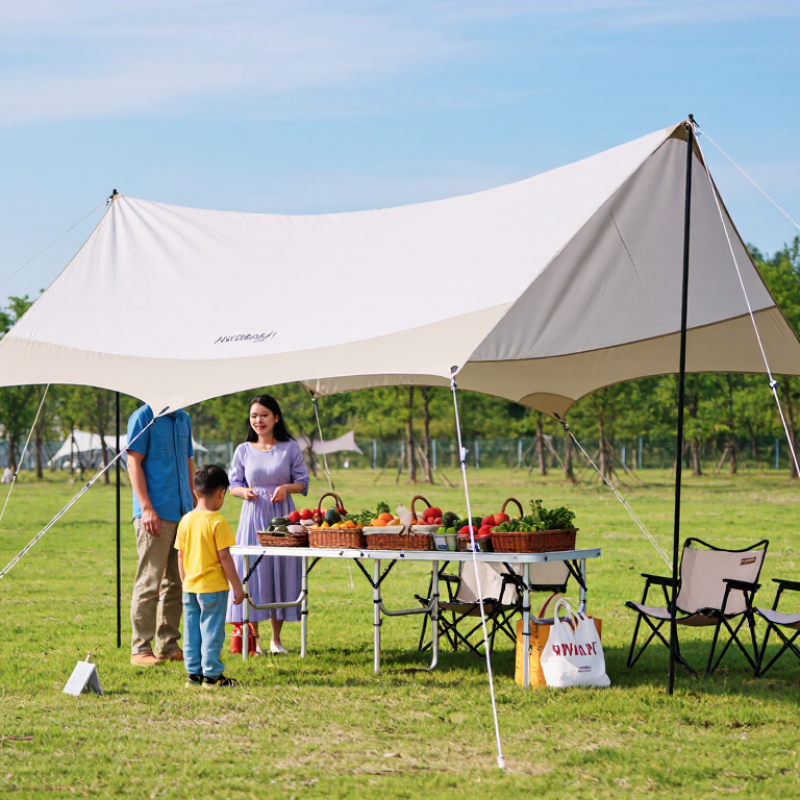
A pop-up canopy creates temporary shade and light rain cover for outdoor activities. Families use one over a picnic table, children’s play area, or backyard food station. At community fairs and outdoor markets, it can mark a stall and protect goods from direct sun. It also gives guests a shaded place to sit during a garden gathering. Setup is usually quick, but the usable space depends on the canopy’s size and layout. Shade matters.
Tips: Choose level ground and secure every leg with suitable weights or stakes. Check the forecast before setting up. A canopy is not safe shelter in strong winds or severe weather.
Think about what will sit beneath it before choosing a location. Leave room for people to move around, and keep hot cooking equipment away from fabric and crowded areas. For markets, arrange tables so visitors can approach without blocking the walkway. For family events, place seating where it stays shaded as the sun moves. A canopy can make an outdoor space more comfortable, though it will not cool the air by itself. I’d avoid assuming it will stay dry in every shower; seams and open sides can let water in.
A pop-up canopy is useful wherever people need temporary shade or light weather protection. At farmers’ markets, it can cover a table of produce and give shoppers a cooler place to browse. For school fairs, it creates a visible spot for sign-ups, refreshments, or craft activities. A dry place helps. Still, canopy fabric and water resistance vary, so check the product details before relying on it in rain.
Outdoor birthdays and family picnics benefit from shelter over food, seating, or a children’s activity table. At sports events, a canopy can give players and spectators a shaded place between games. Community cleanups and outdoor demonstrations also use canopies as simple meeting points. In practice, the setup takes more space than the fabric suggests; allow room for legs, tables, and people moving around. Secure the frame with suitable weights or stakes, especially on open ground. A canopy is not a safe refuge in strong wind or lightning, and it should not block airflow around cooking equipment. Shade matters. Check the forecast, the site surface, and the event’s layout before setting it up.
A pop-up canopy can define a useful area indoors, even when weather is not a concern. At trade shows, school events, or craft fairs, it gives a booth a clear footprint and a simple place to display samples. A fabric top can soften bright overhead lighting, while sidewalls offer a little privacy for changing or storing supplies. At a community workshop, the frame can also mark a registration or demonstration station.
Measure the room before setup. Check ceiling height, doorways, sprinkler clearance, and venue rules; a canopy that fits on paper may still crowd a narrow aisle. Mind the ceiling. Indoors, secure the legs with suitable weights rather than ground stakes, and keep exits and walkways open. One drawback is easy to miss: the legs can steal floor space where visitors need to turn.
Outside, a canopy offers shade for picnics, garden gatherings, outdoor lessons, and market displays. On grass, use stakes where conditions and site rules permit; on pavement, choose stable, purpose-made weights. Wind changes everything. Even a brief gust can lift or strain a frame, so follow its setup guidance and take it down when conditions become unsafe. Keep the canopy clear of grills and other heat sources. A little extra setup time is less annoying than discovering the shade has shifted across the table.
Choosing a pop-up canopy starts with the site, not the color. Measure the space and allow room for chairs, coolers, and people to move around. A 10-by-10-foot canopy covers 100 square feet, but its usable shaded area shrinks when the sun moves. Check the fabric’s UV rating and the frame’s weight; a lighter frame is easier to carry, while a heavier one can be awkward on stairs. The World Health Organization’s Global Solar UV Index guide recommends sun protection at UV Index 3 or higher. Shade helps, but it does not block every reflected ray.
Wind deserves careful thought. A canopy can catch gusts like a sail, especially on open grass or a beach. Check the maker’s stated wind guidance, secure every leg with suitable weights or stakes, and avoid use when conditions exceed that guidance. Never assume a sturdy-looking frame is stormproof. One overlooked detail: packed size matters if the canopy must fit in a small car.
Tips: Check the forecast and venue surface before leaving. Small detail. Practice opening and closing the frame at home, and inspect joints for sticking or damage. For long events, consider adjustable legs, sidewalls for low-angle sun, and a vented top to help release trapped heat. Don’t rely on a canopy as your only sun protection.
Pop-up canopies provide temporary shade or shelter for events, markets, and outdoor gatherings. Canopy size is an important choice: compare the footprint areas below when planning for your space.
Footprint area is calculated by multiplying canopy width by length. It does not represent usable interior space; check site dimensions, clearance, and local setup requirements before choosing a canopy.
© 2022-2025 Pelican Lakes Resort & Golf, All rights reserved | Privacy Policy
BROUGHT TO YOU BY THE WATER VALLEY COMPANY