
Choosing the right fitness trampoline can shape your business performance, customer safety, and long-term reputation. Fitness Trampolines are not simple leisure products. They are training equipment that must support repeated jumps, varied body weights, and frequent cleaning. A studio owner should examine frame strength, mat quality, spring design, handle stability, and weight capacity before comparing prices. These details affect comfort during a ten-minute class and durability after thousands of landings.
In practical settings, equipment selection should begin with the intended user. A rehabilitation center may need lower-impact models with adjustable support. A boutique fitness studio may prioritize compact storage, quiet operation, and a professional appearance. Commercial gyms often require stronger frames and replaceable components. Check manufacturer testing information, warranty terms, assembly instructions, and available spare parts. Independent reviews can help, but they should not replace direct inspection or professional advice. That distinction matters.
A reliable buying process also includes a trial session. Feel the mat response. Listen for unusual movement. Watch how the frame behaves when several users train nearby. Small problems can become expensive complaints. It is easy to focus on attractive design and overlook maintenance time. I have seen businesses underestimate storage space and cleaning routines. That mistake deserves attention. The “best” option may not be the most advanced model. It should match your class format, floor space, budget, and safety procedures. Reassess those assumptions before placing a large order. A careful decision protects customers and supports consistent service.
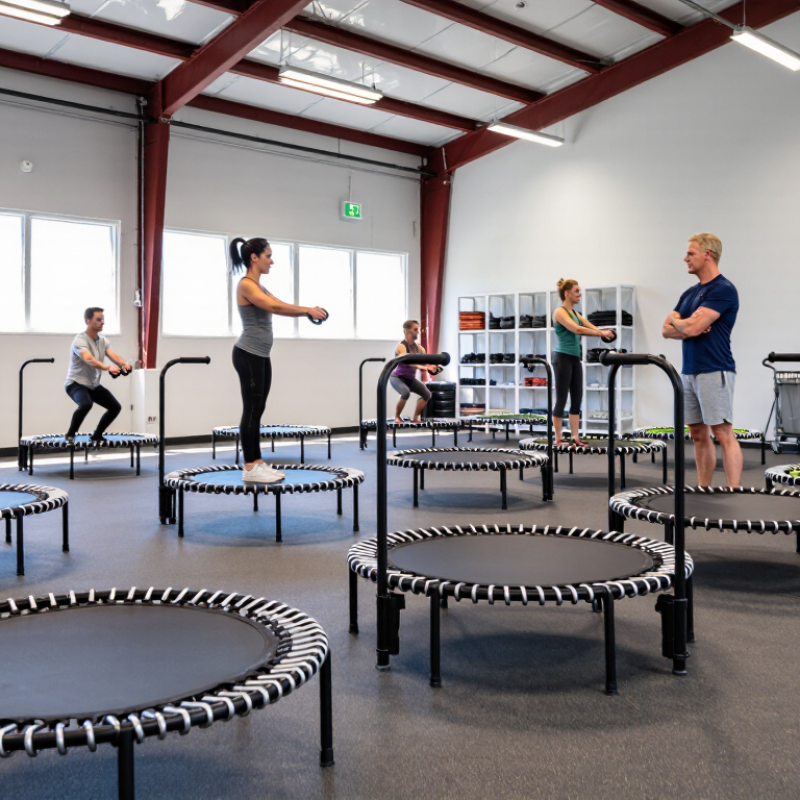
Choosing the best fitness trampoline starts with defining how your business will use it. Group classes need stable equipment, consistent bounce, and enough space for safe movement. A wide frame can help beginners feel more confident. Non-slip feet matter when several participants exercise together. The surface should also be easy to wipe between sessions. Small details become important during a busy timetable.
Studios often need trampolines that look professional and remain comfortable after repeated use. Check the frame, springs, mat stitching, and weight capacity before ordering multiple units. Ask whether replacement parts are available. High-frequency training demands more than a strong first impression. It requires reliable performance across morning classes, private sessions, and evening workouts. Track noise, bounce changes, and loose fittings during weekly inspections. Your instructors will notice problems before customers do.
Do not choose by price alone. A cheaper model may create higher maintenance costs. I have found that staff feedback can reveal issues that product descriptions miss. Let instructors test the bounce with different body sizes and exercise speeds. Record what feels stable, awkward, or tiring. One mistake is expecting every trampoline to suit every class. That assumption sounds efficient, but it can reduce comfort and limit programming. A short trial period is wiser, even if it delays the purchase.

Choosing a fitness trampoline for business starts with the room, not the product brochure. Instructors need safe spacing around every rebounder, especially when classes move quickly. A 36-inch model suits compact studios, consultation rooms, and narrow training zones. It leaves more walking space between stations. Yet its smaller surface may feel restrictive for taller clients or wider movements. That trade-off is easy to overlook.
A 40- or 42-inch rebounder often offers a practical middle ground. It provides more landing area without consuming the floor space of a larger unit. Measure usable space, not the room’s advertised dimensions. Include walls, columns, storage carts, mirrors, and instructor access. Mark each footprint with tape before ordering. Then test a stepping pattern around it. This may reveal awkward corners that a floor plan hides. Check the frame, mat, weight capacity, and stability details before purchase.
The 48-inch size can support confident movement and a more generous client experience. However, several units may quickly crowd a small studio. Crowding increases contact risks and makes coaching less precise. Keep clear pathways for entry, exits, and equipment adjustments. I have seen businesses plan for the class but forget cleaning and storage. That mistake is costly. Recheck measurements with a full schedule in mind. A smaller setup may serve more clients comfortably, though not every class will agree.
How to Choose the Best Fitness Trampoline for Your Business
Assess Frame, Mat, and Bounce-System Durability for Repeated Sessions
A fitness trampoline in a busy studio may handle dozens of sessions each week. Its frame should feel stable under repeated, even landings. Check welds, leg connections, and protective coverings for rough edges or movement. A slight wobble during a quiet test can become distracting in a full class. I once focused too much on frame size; that alone told me little about long-term sturdiness.
The mat needs tight, even stitching and a surface that stays secure when users change direction. Inspect the attachment points closely, since wear often appears there first. Then consider the bounce system. Springs and elastic cords can both work well, but their tension should remain consistent across the jumping surface. Uneven rebound may feel tiring, especially during fast routines. Ask about maintenance intervals and replacement parts, and test the unit with varied body weights if possible. One quick bounce test is not enough.
Tips: Listen for squeaks during repeated jumps. Recheck bolts after initial use. Keep a simple inspection log. It may feel fussy, but small checks can catch loosened fittings before they disrupt a class. Don’t rely on appearance alone.
| Assessment area | What to check | Business-use target | Practical verification | Why it matters for repeated sessions |
|---|---|---|---|---|
| Frame material and finish | Frame construction, weld quality, corrosion protection, and finish around joints. | Look for a rigid steel frame with consistent welds and a durable protective coating. Confirm the manufacturer’s stated maximum user weight and intended-use guidance. | Inspect welds and joints for cracks, sharp edges, uneven finish, or visible rust. Ask for the frame material and care instructions in writing. | A stable, well-finished frame is less likely to loosen or corrode under frequent setup, use, and cleaning. |
| Frame geometry and stability | Leg attachment, number and spread of support points, locking connections, and movement during use. | Choose a frame that sits level on the intended floor and has secure, repeatable connections. Check that the assembled unit does not rock under normal exercise movements. | Assemble according to the instructions, check every connection, then test stability on a flat surface before use. | Repeated classes can expose loose connections and instability more quickly than occasional home use. |
| Jumping mat fabric | Fabric type, stitching quality, attachment points, and resistance to wear from shoes or repeated contact. | Ask for the mat material, cleaning guidance, and replacement availability. Prefer reinforced attachment areas and even, intact stitching. | Examine the full perimeter and each attachment point for skipped stitches, fraying, cuts, or uneven tension. Confirm whether footwear is permitted by the product instructions. | The mat flexes on every bounce; damaged fabric or stitching can compromise support and may require early replacement. |
| Mat size and user fit | Usable jumping area, clearance around the trampoline, and suitability for the planned class format. | Match the mat size to the intended exercises and available floor space. Allow safe clearance around each unit in accordance with the manufacturer’s instructions and local facility practices. | Measure the usable mat area and planned floor layout. Trial the movements that participants will perform before purchasing multiple units. | A suitable mat area helps users maintain control during repeated movements and reduces interference between nearby stations. |
| Bounce system | Spring or elastic-cord design, attachment security, bounce consistency, noise, and maintenance requirements. | Use the manufacturer’s specified user-weight limits and maintenance schedule. Check that the system produces a consistent response across the mat. | Inspect springs for deformation or corrosion, or cords for fraying and uneven tension. Listen for unusual noises and compare bounce response at several points. | Uneven or deteriorating bounce components can affect exercise feel and may increase maintenance needs in a high-use setting. |
| Maximum user weight | Published limit for the complete trampoline, not just an individual component. | Select a model whose stated maximum user weight is appropriate for the intended participants and exercises. Do not exceed the published limit. | Check the product label and manual; obtain confirmation from the supplier if the limit or intended use is unclear. | Weight limits are product-specific safety guidance and should not be estimated from appearance or frame dimensions. |
| Repeated-use suitability | Whether the product is designed for the planned frequency, session length, and user turnover. | Ask the supplier to confirm suitability for commercial or group use and request any stated use restrictions. Do not assume that a home-use model is suitable for a studio. | Request the manual, inspection schedule, warranty terms, and written guidance on expected use and maintenance. | Intended-use guidance helps distinguish equipment designed for occasional use from equipment appropriate for a busy facility. |
| Maintenance and replacement parts | Availability of mats, springs or cords, feet, fasteners, and service support. | Confirm which parts are replaceable, how they are ordered, and whether the supplier provides inspection or repair guidance. | Ask for part numbers, lead times, and replacement instructions before purchasing. Keep a documented inspection and maintenance log. | Accessible parts and routine inspections can reduce downtime and help identify wear before it becomes a safety concern. |
| Warranty and documentation | Coverage by component, exclusions, commercial-use terms, and available product documentation. | Review the written warranty for frame, mat, and bounce system separately. Confirm whether business or group-class use is covered. | Save the warranty, manual, purchase records, and supplier responses. Check whether wear parts are excluded or have different coverage periods. | Clear terms help a business plan replacement costs and avoid relying on assumptions about coverage. |
| Overall purchasing decision | Durability evidence, fit for the planned sessions, serviceability, and total ownership needs. | Select only after verification Prioritize documented intended use, stable construction, inspectable components, and available replacement parts. | Compare manuals and written specifications across shortlisted models, then inspect or trial a sample unit before a larger order. | A structured review is more reliable than choosing on price or bounce feel alone. |
Note: The targets above are purchasing and inspection considerations, not universal industry standards. Product limits, maintenance intervals, and intended-use ratings vary; follow the specific manufacturer’s instructions and applicable local safety requirements.
Choosing a fitness trampoline for business use requires more than checking its advertised bounce. Verify the weight rating in writing. Ask whether it covers one user, repeated commercial sessions, or added equipment. A 100-kilogram customer may create greater impact than a steady, controlled jump. Leave a practical safety margin. Real sessions are rarely perfect.
Inspect the frame, mat, springs, handlebar, and protective padding before purchase. Request test methods, not vague phrases such as “heavy duty.” Warranty terms deserve the same attention. Confirm coverage for commercial use, replacement parts, labor, shipping, and expected response times. Some warranties exclude studios, rental programs, or high-frequency operation. That detail can change the equipment’s real cost. I have seen buyers focus on the frame and overlook worn mats.
Review ASTM F381-16(2022) carefully before treating it as proof of suitability. Check the standard’s scope and whether it applies to your trampoline’s design and intended use. Compliance may depend on product type, testing conditions, and documented evaluation. Ask for a current declaration, test report, and responsible testing organization. Do not accept a certificate without identifying the exact model. The standard may not address every commercial fitness application. That limitation matters. A supplier’s confident answer is useful, but independent verification is more reliable. Keep records of ratings, warranty promises, inspection schedules, and maintenance instructions before placing several units in service.
A business trampoline should be judged by cost per class, not purchase price alone. Record the purchase price, expected service life, replacement parts, and estimated annual class volume. A practical formula is: total ownership cost divided by total expected classes. For example, a $900 trampoline with $240 in parts over six years costs $1,140. If it supports 800 classes yearly, the equipment cost is about $0.24 per class.
Small details can change the result. Springs, protective covers, feet, and frame pads may need replacement at different intervals. Keep a maintenance log. Note the date, part, cost, and hours of use. That record creates stronger evidence than a sales estimate. Inspect the jumping surface before busy sessions, especially when several instructors share the equipment. Safety checks also protect service life.
Expected life is not a promise. Heavy commercial use, poor storage, and repeated overloading can shorten it. Be conservative. Perhaps six years becomes four. Recalculate both cases before buying. I once underestimated downtime in a budget model, which made the hourly value look better than reality. That mistake matters. Include delivery, routine inspection labor, and occasional class cancellations when your records support those costs. A cheaper trampoline can become expensive when parts are difficult to source or repairs interrupt the schedule. Reliable cost planning leaves room for uncertainty. That is less exciting, but more useful.
Estimated cost per class based on purchase price, replacement parts, expected service life, and regular studio use.
© 2022-2025 Pelican Lakes Resort & Golf, All rights reserved | Privacy Policy
BROUGHT TO YOU BY THE WATER VALLEY COMPANY