
Choosing the right Firestopping Sealant for a global project requires more than comparing product datasheets. Each building has different wall types, floor assemblies, service penetrations, movement conditions, and installation environments. A sealant tested for one fire-rated system may not perform equally in another. The assembly matters.
Experienced project teams begin with the tested system, not the sealant alone. They review fire-resistance ratings, joint width, substrate compatibility, temperature range, curing conditions, and expected movement. Pipe materials, cable bundles, insulation, and penetration sizes also influence the approved solution. Small details can change the result.
Regional requirements create another challenge. International projects may involve EN, ASTM, UL, or local certification pathways. These standards are not automatically interchangeable. Specifications should be checked with the authority having jurisdiction and qualified fire protection professionals. Reliable manufacturers provide current test reports, installation instructions, safety data, and traceable batch information.
Site conditions matter too. Dusty concrete, high humidity, cold storage areas, or rushed preparation can weaken performance. Clean surfaces properly. Follow the listed installation method.
There is no universal product.
A practical selection process should connect design approval, procurement, installation, inspection, and maintenance. Digital records can help teams confirm product identity and application details across multiple countries. Still, documentation alone cannot replace competent workmanship. That is where project planning sometimes falls short.
This guide examines how to compare Firestopping Sealant options with technical discipline and realistic expectations. It also considers cost, availability, compatibility, and long-term reliability. Some decisions may remain uncertain. Careful review is better than confident guessing.
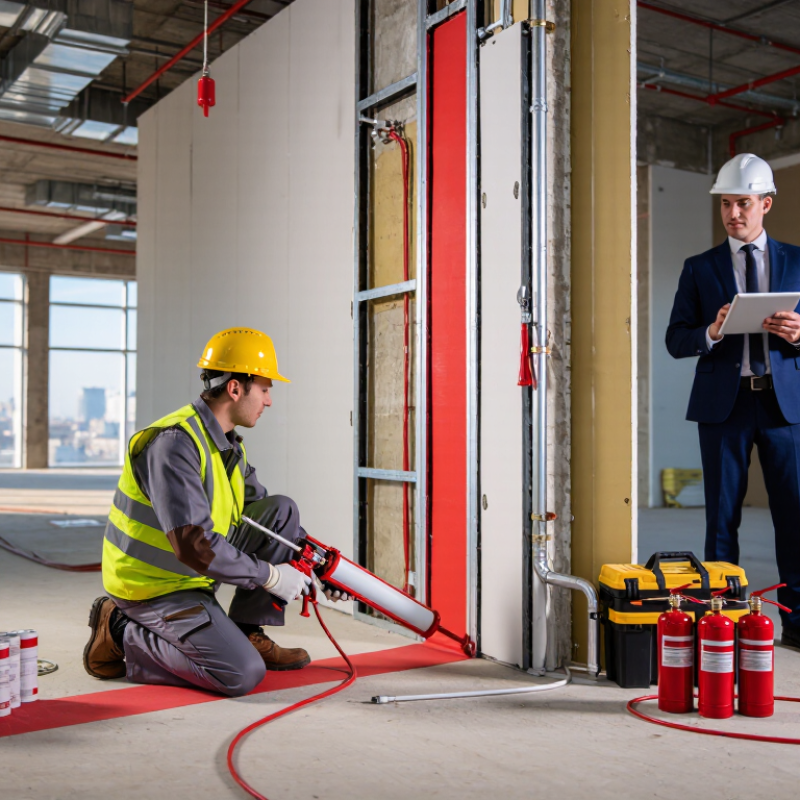
Firestopping sealant is a life-safety component, not ordinary gap filler. It helps preserve fire resistance and limit smoke movement through walls, floors, joints, and service penetrations. Selection starts with the tested assembly, not the product brochure. That detail matters. ASTM E814, EN 1366-3, and ISO 10295 evaluate different firestopping conditions, so their results are not automatically interchangeable.
NFPA reported 1,504,500 fires in the United States during 2022, causing 3,790 civilian deaths and 18.1 billion dollars in property damage (NFPA, Fire Loss in the United States During 2022, 2023).
Global construction adds uncertainty. Substrates may include concrete, masonry, gypsum, steel, or engineered timber. Climate also changes performance risks, especially moisture, temperature cycling, and joint movement. The sealant must match the approved assembly, required fire rating, smoke-control objective, movement range, and installation depth. Check backing materials, primer requirements, curing time, and application temperature. A laboratory rating does not excuse poor field installation.
The 2023 Global Status Report for Buildings and Construction attributes 34 percent of global energy demand and 37 percent of energy-related process emissions to the buildings sector (UNEP, 2023).
Durable firestopping supports safer, longer-lasting buildings, even though it is not an energy-efficiency measure by itself. Site teams should record batch details, substrate conditions, photographs, and inspection results. Small gaps can remain hidden above ceilings. That is the uncomfortable part. Specifications can still be incomplete, and drawings may not reflect actual services. A pre-installation review with qualified fire engineers and local authorities is therefore sensible, but never a substitute for verified testing and competent workmanship.

Concrete, masonry, gypsum board, metal, and timber each behave differently during a fire. Porous surfaces may need priming, while dusty substrates can weaken adhesion. Check moisture, surface temperature, and installation access before approving a product. Small site conditions matter.
A static penetration seal is not suitable for a moving expansion joint. Measure the expected movement, joint width, and depth, then compare them with tested assembly data. Consider pipes, cables, insulation, and their spacing. Mixed penetrations can change the heat path. They are easy to underestimate.
Review the required integrity and insulation ratings, not only the sealant’s stated performance. Use third-party test reports and installation instructions that match the actual assembly. Translation issues can create dangerous gaps. Ask a qualified fire engineer to verify the design when evidence is incomplete.
Record batch details, substrate conditions, joint dimensions, and inspection photographs. A neat bead does not prove compliance. Some projects still rely on generic drawings, and that is a weakness worth admitting. Recheck unusual details before work closes behind ceilings or finishes.
Firestopping sealant selection begins with the tested system, not the product label. Silicone sealants suit movement, moisture, and exterior joints. Acrylic sealants often fit protected interior penetrations and low-movement gaps. Intumescent sealants expand when heated and protect combustible pipes or cables. Each type has limits. A neat bead is not proof of compliance.
International projects require careful comparison of standards. ASTM E814 and UL 1479 evaluate penetration and joint systems under fire conditions. EN 1366-3 covers penetration seals, while EN 1366-4 addresses linear joint seals. EN 13501-2 supports fire classification in European projects. These standards are not interchangeable automatically.
Check the exact tested assembly, including wall type, floor thickness, pipe material, backing depth, joint width, and movement rating. Small differences can invalidate an approval.
Reliable documentation should include independent test reports, classification reports, installation instructions, and applicable regional approvals. In Europe, check the relevant assessment and declaration documents. Other regions may require local listings or authority acceptance.
On active sites, inspectors often find missing backing material or incorrect sealant depth. This happens even with qualified installers. Therefore, record batch details, ambient conditions, photographs, and inspection results. Field conditions are rarely perfect. Rechecking the approved detail before installation is slower, but usually cheaper than repairing a failed penetration.
Choosing firestopping sealant for global projects requires more than checking a technical datasheet. Climate, installation conditions, and material compatibility can change performance significantly. A product suitable for a dry warehouse may behave differently in a coastal hospital or a high-altitude tunnel.
Review temperature ranges, humidity, UV exposure, and water movement before approval. In tropical regions, sealed joints may face heat, heavy rain, and rapid drying. In colder areas, movement from freeze-thaw cycles can stress the seal. Installation also matters. Dusty concrete, damp substrates, limited access, and rushed curing times can reduce adhesion. These details are often missed during office-based selection.
Tips: Build a site condition checklist before purchasing. Confirm substrate types, joint width, movement capacity, curing requirements, and required fire-test classifications. Check compatibility with cables, pipes, coatings, insulation, and backing materials. Small chemical differences can cause softening, staining, or bond failure. Request documented test evidence and installation guidance from qualified technical sources. Then ask local installers to review the method. Their practical experience may reveal problems that drawings hide.
A controlled mock-up is valuable. Test the sealant on real substrates, not only sample boards. Record application temperature, surface moisture, tooling method, and curing time. This creates reliable project evidence. Still, no selection is perfect. Site conditions can change after approval. Rechecking materials during construction is a sensible, sometimes overlooked, discipline.
Choosing firestopping sealant for a global project starts with evidence, not color or price. On site, I have seen a neat bead fail because the tested wall assembly was different. Match the sealant to the exact penetration, substrate, joint width, and movement range. Small details matter. Review test reports, classification documents, installation instructions, and third-party evaluations. Confirm that documents cover the required fire rating, orientation, thickness, and service conditions. Check local code requirements in every project location. If a report uses unfamiliar standards, ask a qualified fire engineer to explain its scope.
Documentation must travel with the project, even when teams change. Keep controlled copies of certificates, batch records, safety data, and approved shop drawings. Record the supplier’s technical contact and the date each document was verified. Translations need technical review, not automatic conversion. A missing revision can create confusion during inspection. Digital records should identify each penetration, installation date, and responsible installer.
Long-term maintenance deserves equal attention. Inspect exposed seals for cracking, shrinkage, damage, moisture, or unauthorized alterations. Set inspection intervals around building use, climate, access, and risk. In coastal or high-humidity areas, detail drainage and compatible backing materials carefully. Keep photographs showing location, depth, and surrounding services. I would not assume a sealant remains suitable after nearby cables are replaced. That assumption is easy, and often wrong. Make repair criteria clear before handover, including removal limits and reinstallation requirements. Some projects still underfund this step. It shows later.
© 2022-2025 Pelican Lakes Resort & Golf, All rights reserved | Privacy Policy
BROUGHT TO YOU BY THE WATER VALLEY COMPANY