What Are China Top 10 Wireless Lock Manufacturers?
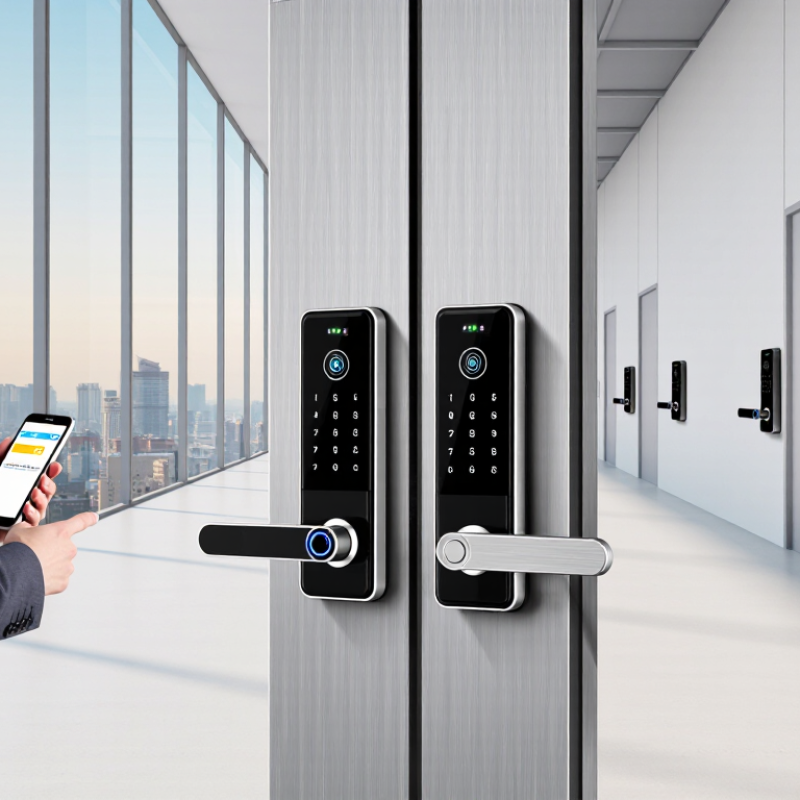
Wireless Lock technology is changing how homes, hotels, offices, and warehouses manage everyday access. Instead of carrying metal keys, users may enter with smartphones, PIN codes, cards, or verified biometric credentials. Behind that simple tap, however, several systems must work together. These include encrypted communication, battery monitoring, user permissions, mechanical strength, and reliable software updates.
Access-control specialist Dr. Andrew Blyth describes the core challenge clearly: “Convenience must be designed around security, not placed above it.” His observation offers a practical lens for examining China’s leading Wireless Lock manufacturers. A polished mobile application means little when a lock loses power beside a hotel room door. A strong cylinder also needs thoughtful access logs, emergency entry options, and responsive technical support.
This guide reviews China’s top ten manufacturers through practical and professional criteria. These include product design, production capability, certification awareness, integration options, after-sales service, and market experience. Factory scale matters. So does the small detail of whether a fingerprint reader works after repeated use or damp weather.
Some rankings remain debatable. Public information can be incomplete, and manufacturers often emphasize their strongest features. That limitation deserves attention. A company may excel in apartment projects but offer fewer solutions for industrial sites. Another may provide advanced cloud management but need stronger local support. Therefore, this overview is not a final verdict. It is a useful starting point for buyers, distributors, architects, and security professionals comparing China’s Wireless Lock industry with clearer expectations.
China’s Wireless-Lock Market: Bluetooth SIG’s 5.4B Device Forecast for 2024
China’s wireless-lock market is expanding with the wider Bluetooth ecosystem. The Bluetooth SIG 2024 Market Update forecasts 5.4 billion Bluetooth device shipments in 2024. That figure includes phones, access systems, sensors, and connected household equipment. It does not represent locks alone. Still, the scale shows why wireless access is becoming a serious manufacturing category.
For a China top-10 manufacturer list, shipment volume is only one filter. Factory audits, firmware-update procedures, battery testing, and certification records matter more in daily use. A practical assessment should examine unlock latency, encrypted communication, offline access, and resistance to dust and moisture. The best manufacturers usually provide test samples, failure data, and clear production traceability. That experience is more useful than polished catalog claims.
Market forecasts remain imperfect. Some reports combine smart locks with broader connected-home devices, which can inflate apparent demand. The 2024 IoT Analytics market outlook also indicates continued growth in connected-device deployments, but regional adoption varies sharply. Apartment retrofits, hotels, offices, and new housing projects require different hardware. A lock that performs well on a showroom door may struggle after thousands of outdoor cycles. Procurement teams should request independent laboratory results and pilot installations before ranking suppliers. That step is often skipped. It should not be.
Ranking the Top 10: Revenue, Output, Patents, Exports, and Certifications
China’s top ten wireless lock manufacturers should be judged beyond factory size. Revenue remains a practical signal, while production capacity shows whether suppliers can support large projects. Fortune Business Insights valued the global smart lock market at about US$2.52 billion in 2023, with strong growth expected through 2030. That expansion makes capacity evidence important.
A credible ranking combines audited revenue, annual output, and export performance. China Customs data can verify overseas shipment trends, although product classifications may include related electronic locks. Patent strength should be checked through WIPO PATENTSCOPE, including granted patents, active families, and international filings. Large numbers alone can mislead. Some patents have limited commercial value. Export stability also matters, especially across several regions rather than one market.
Certifications add another layer of trust. ISO 9001 supports process control, while ISO 14001 indicates environmental management. Depending on the destination, buyers may also request CE, FCC, RoHS, or cybersecurity testing records. These documents should match the actual factory and product series. Not every supplier publishes audited figures, so the top-ten list must disclose estimation methods. That weakness deserves attention. A manufacturer with moderate revenue, consistent output, verified patents, reliable exports, and current certifications may deserve a higher position than a larger but less transparent competitor.
Top 10 Chinese Manufacturers: Products, Protocols, and Target Markets
China’s top ten wireless lock manufacturers cover a wide range of products, from hotel door locks to cabinet locks, apartment cylinders, and smart padlocks. Their product lines often include fingerprint readers, keypad panels, mobile unlocking, and access cards. Many factories also provide software dashboards for property managers. This is practical for hotels, offices, rental housing, and student residences.
Protocol choices differ by project. Bluetooth supports nearby phone access, while Wi-Fi enables remote monitoring. Zigbee and Z-Wave can reduce power use in larger smart-building systems. Some manufacturers also support NFC, gateway communication, and application programming interfaces. Export-oriented factories usually offer customized firmware, multilingual software, and enclosure designs. Their target markets include Southeast Asia, Europe, the Middle East, North America, and domestic commercial projects. However, protocol compatibility must be tested before purchase. A beautiful lock can still fail inside a crowded concrete building.
Tips: Request samples before signing a large order. Test battery life, emergency power, signal range, and recovery after network loss. Check whether audit logs show user, time, and door details. Ask for material reports and relevant safety documentation. Factory visits, production records, and independent inspections add useful evidence. No manufacturer is perfect; even experienced suppliers may overlook rain exposure or unstable voltage. Buyers should document these risks and require clear support terms.
Compliance Check: ANSI/BHMA Grades 1–3, EN 14846, and IP Ratings
When comparing China’s top 10 wireless lock manufacturers, compliance should guide the shortlist, not marketing language. A reliable evaluation begins with the exact lock model, reader, controller, and power system. ANSI/BHMA Grades 1–3 indicate different levels of durability and security. Grade 1 is typically selected for demanding commercial or institutional use. Grades 2 and 3 may suit lighter traffic, depending on the door and risk profile.
EN 14846 is important for electromechanically operated locks and striking plates. Check whether the tested configuration matches the proposed installation. A certificate for one mechanism may not cover another wireless module or cylinder. Ask for test reports, scope details, production dates, and traceable model numbers. Small differences matter. A swapped latch can change performance.
IP ratings also need careful reading. IP65 may protect against dust and water jets, but it does not prove resistance to flooding, condensation, or chemical cleaning. Inspect the gasket, cable entry, battery compartment, and mounting surface. Field conditions are often harsher than laboratory conditions. I have found that installation drawings sometimes omit drainage or door movement details. That is a weakness worth challenging. Compliance documents help, but independent sampling and a real door-cycle trial provide stronger evidence. Retesting after firmware, battery, or housing changes is still necessary.