
What Is a Breathable Shirt and Why Do Buyers Choose It?

A Breathable Shirt is more than a lightweight garment. It is designed to help air circulate and moisture move away from the skin. This matters during commuting, outdoor work, travel, exercise, and warm indoor days. A shirt can feel thin but still trap heat. That detail is often overlooked.

Textile scientist Dr. Seshadri Ramkumar emphasizes that “moisture management is critical for comfort in performance textiles.” His observation explains why buyers examine fabric construction, fiber choice, and drying performance before purchasing. Cotton may feel soft and familiar. Polyester blends can dry faster. Linen often feels airy, though it wrinkles easily. No fabric wins every situation.

Real comfort is personal.

A useful Breathable Shirt should reduce the damp feeling around the back, chest, and underarms. Mesh panels, open weaves, and moisture-wicking finishes may improve airflow. However, marketing claims do not always match daily experience. A shirt labeled “breathable” may still feel warm under a backpack or tight outer layer. Buyers should consider fit, seam placement, fabric weight, and washing instructions.

This guide explores how breathable fabrics work and why customers choose them. It also questions a common assumption: lighter does not always mean cooler. The best choice depends on climate, activity, skin sensitivity, and personal comfort. Small differences become noticeable after several hours of wear. A practical buyer looks beyond the label and examines how the shirt performs in real conditions.
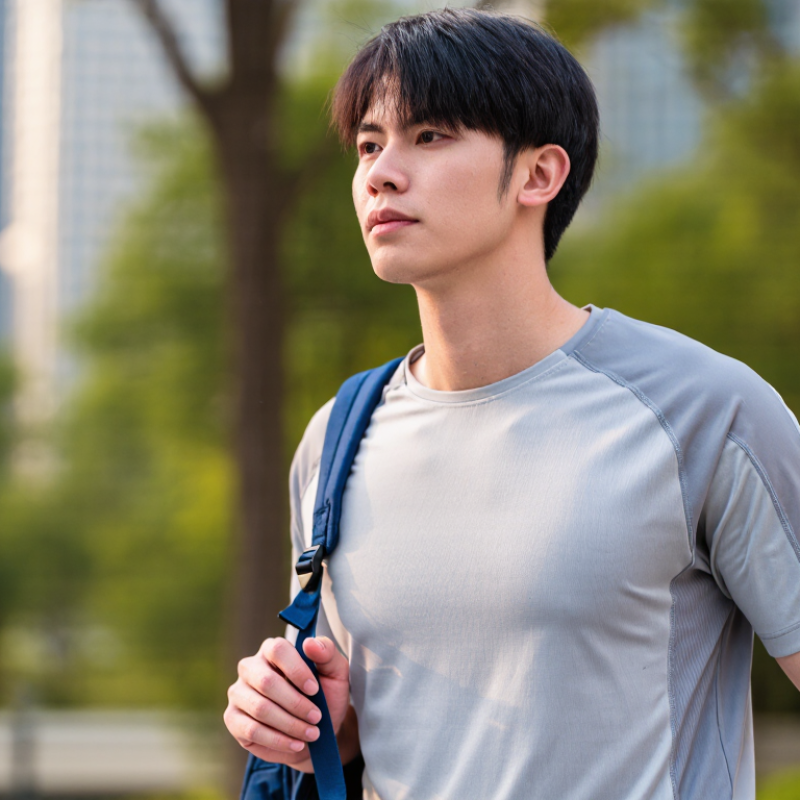
What Is a Breathable Shirt and Why Do Buyers Choose It?

Breathability Defined: MVTR, CFM, and RET Industry Metrics

A breathable shirt is designed to move heat, air, and moisture away from the skin. Breathability is not one number. Three industry metrics explain it better:

MVTR
Water vapor transmission
CFM
Air permeability
RET
Evaporative resistance

MVTR measures water vapor transmission, usually in grams per square meter over 24 hours. ASTM E96 testing commonly reports lightweight fabrics between 5,000 and 20,000 g/m²/24h, although test conditions can change the result. Higher MVTR generally suggests better moisture movement. CFM measures air permeability under ASTM D737. A higher CFM value means more air passes through the fabric, which can feel cooler during walking or cycling. However, high airflow may reduce wind protection. That trade-off matters.

RET measures evaporative resistance under ISO 11092. Lower values are better. Hohenstein’s textile comfort guidance describes RET below 6 as very good, while values above 20 indicate limited moisture transfer. Buyers often choose shirts with balanced results rather than chasing one impressive figure. A shirt with high MVTR can still feel clammy if its CFM is low. A very open fabric can dry quickly, yet expose skin to a cold breeze.

Feel the difference.

A practical test helps: wear the shirt for twenty minutes, then check the back panel near the shoulder blades. Dampness, cling, and slow drying reveal weaknesses that a product table may hide. These metrics are useful, but not perfectly comparable. Different labs, pressures, temperatures, and fabric finishes can distort direct comparisons.

Fiber and Fabric Structures: How Materials Control Moisture and Airflow

A breathable shirt is not simply a thin shirt. Its comfort depends on fiber behavior and fabric construction. During a warm afternoon trial, I noticed a loose linen weave dried faster than a dense synthetic knit. The difference was clear.

Fibers manage moisture in different ways. Hydrophilic fibers, such as cotton and wool, can absorb vapor and liquid sweat. This may feel comfortable at first, but soaked fabric can dry slowly. Some synthetic fibers move moisture along their surfaces, helping it spread across a larger area. That can improve evaporation when air reaches the skin.

Fabric structure controls airflow. Open weaves create small channels for heat and vapor to escape. Mesh panels increase ventilation, while a tight weave offers more protection from wind. Knitted fabrics often stretch and form air spaces, but heavy knits may trap warmth. Fiber alone does not decide performance.

Fit matters too. A shirt pressed tightly against the back leaves little room for air movement. A relaxed cut can support natural ventilation, even with a moderate-density fabric. I have also found that dampness ratings do not always match real use. Washing, body movement, humidity, and backpack pressure can change the result. Breathability is useful, but it is not a fixed promise.

Laboratory Testing: ISO 11092 and ASTM D737 Performance Methods

A breathable shirt should manage heat, sweat, and moving air without feeling clammy. Buyers often want comfort during commuting, exercise, or warm warehouse work. Yet “breathable” is not a single measurable quality. A fabric may pass air easily but resist water-vapor movement. Another may release vapor well while blocking noticeable airflow.

ISO 11092 examines thermal resistance and water-vapor resistance under controlled sweating conditions. A guarded hotplate creates a warm, moist surface beneath the specimen. Lower water-vapor resistance usually indicates easier moisture transfer. This method helps compare fabrics with technical precision. However, it does not fully represent a finished shirt on a moving body. Seams, tight sleeves, coatings, and body position can change comfort.

ASTM D737 measures air permeability through fabric under a specified pressure difference. Results commonly show how much air passes through a defined area over time. Higher airflow can support ventilation, but it may also reduce wind protection. Testing should record fabric direction, conditioning, pressure settings, and specimen location. Small preparation errors can influence results.

Numbers need context.

In real product evaluation, I would compare both methods rather than trust one value. A shirt with strong ISO 11092 performance may still feel warm if its construction traps air. A highly permeable shirt may dry quickly but feel drafty outdoors. Laboratory results are valuable evidence, not a perfect promise. Buyer preferences, climate, activity level, and fit still deserve careful consideration.

What Is a Breathable Shirt and Why Do Buyers Choose It?

Laboratory breathability is commonly assessed through air permeability under ASTM D737 and evaporative resistance under ISO 11092. Higher air permeability and lower evaporative resistance generally indicate better moisture and heat transfer.

The chart uses representative, non-brand textile values for comparison. Air permeability is shown in ft³/min/ft², while evaporative resistance (Ret) is shown in m²·Pa/W. These results can vary with fabric weight, weave, finishing, humidity, and test conditions. Buyers often choose breathable shirts because they can improve airflow, reduce moisture buildup, and support thermal comfort during active or warm-weather use.

Industry Benchmarks: RET Below 6 and MVTR Above 10,000 g/m²/24h

What Is a Breathable Shirt and Why Do Buyers Choose It?

A breathable shirt helps move heat and moisture away from the skin. Buyers notice this during commuting, hiking, or long hours indoors. The key benchmarks are RET below 6 and MVTR above 10,000 g/m²/24h. Lower RET means less resistance to water-vapor movement. Under ISO 11092, a low RET generally indicates stronger evaporative breathability. A shirt with RET 5 can feel noticeably less clammy than one measuring 12.

MVTR measures how much water vapor passes through fabric within 24 hours. ASTM E96 technical guidance shows why test procedures matter. Cup method, temperature, humidity, and fabric preparation can change the result. Therefore, MVTR above 10,000 g/m²/24h is useful, but it is not a universal guarantee. Numbers need context.

Some laboratory reports from textile testing institutes also warn that seams, coatings, and garment construction affect real performance.

In practical use, a breathable shirt should feel dry around the upper back after ten minutes of steady walking. Mesh zones may improve airflow, while dense prints can reduce vapor transfer. Fit still matters. A tight shirt can trap damp air, even with excellent fabric results. I would not judge breathability from one number alone. The benchmark is helpful, but imperfect. Buyers should check the test method, fabric weight, and construction details before trusting a performance claim.

Why Buyers Choose Breathable Shirts: Comfort, Cooling, and Moisture Control

What Is a Breathable Shirt and Why Do Buyers Choose It?

Buyers often choose breathable shirts for three practical reasons: comfort, cooling, and moisture control. A breathable fabric lets heat and water vapor move away from the skin. That matters during commuting, travel, workouts, or warm indoor work. A shirt can feel cool at first, yet become heavy after ten minutes of walking. The label is not a verdict.

Textile Exchange’s Materials Market Report 2024 estimated that polyester represented about 57% of global fiber production in 2023, while cotton accounted for about 19%. This scale shows why fiber choice deserves attention, but fiber alone does not determine comfort. Fabric structure, yarn size, finishing, and fit also affect airflow. A textile laboratory may use AATCC TM195 to assess liquid moisture movement. However, real wear includes sweat, body shape, washing, and changing weather. Laboratory performance can be useful, but it is not the whole experience.

Tips: Check the fabric weight, open knit structure, and care label. Hold the shirt near a light source. Small spaces between yarns often suggest better airflow. For humid conditions, test the shirt during a short walk before buying several. A loose fit may improve ventilation, but an oversized cut can trap moisture under layers. Personal comfort remains difficult to measure perfectly.

What Is a Breathable Shirt and Why Do Buyers Choose It? - Why Buyers Choose Breathable Shirts: Comfort, Cooling, and Moisture Control

Breathability Dimension What It Means Common Shirt Feature or Material Why Buyers Choose It Important Consideration
Air Circulation Allows air to move through the fabric and helps warm, humid air escape from next to the skin. Loose weave, mesh panels, eyelets, or lightweight construction. Feels less stuffy during commuting, travel, outdoor activities, and warm weather. A very open structure may provide less wind protection and privacy.
Moisture Absorption Describes how much water vapor a fiber can absorb within its structure. Cotton, linen, and wool are moisture-absorbent natural fibers. Can reduce the clammy sensation caused by sweat sitting directly on the skin. Absorption alone does not guarantee quick drying; fabric thickness and construction also matter.
Moisture Wicking Moves liquid sweat across or along the fabric surface so it can spread and evaporate more easily. Capillary-knit polyester, polypropylene, or specially engineered blends. Helps active users manage perspiration during exercise and physical work. Wicking performance varies significantly with yarn, knit structure, finish, and fit.
Evaporative Cooling Cooling occurs when moisture evaporates and removes heat from the fabric and surrounding skin. Lightweight, spreadable fabrics with good airflow. Supports a cooler, drier feeling in warm and moderately humid conditions. Evaporation is slower in very humid air, where the atmosphere already contains substantial moisture.
Fabric Weight Refers to the mass of fabric, commonly expressed as grams per square metre (GSM). Lightweight shirts generally use thinner yarns, lighter knits, or open constructions. Lower fabric mass often feels less restrictive and reduces heat retained by the garment. A lighter shirt may offer less durability, opacity, warmth, or abrasion resistance.
Fit and Ease The space between the body and garment affects airflow and how quickly heat and moisture can escape. Relaxed fit, underarm gussets, side vents, and articulated panels. Improves comfort without relying only on the fiber content. An excessively loose fit can reduce layering efficiency and may catch on equipment.
Natural Moisture Regain The approximate moisture content a fiber holds at standard atmospheric conditions, expressed as a percentage of its dry weight. Cotton: about 8.5%; linen: about 12%; wool: about 14–18%; polyester: about 0.4%. Helps buyers understand why some fibers feel more absorbent while others tend to hold little internal moisture. Moisture regain is not the same as drying speed, wicking ability, or total garment comfort.
Skin Contact and Seams Seam placement, surface texture, and softness influence how comfortable a shirt feels when worn for long periods. Flat seams, soft labels, smooth yarns, and reduced seam bulk. Reduces rubbing and irritation during movement or extended wear. A soft hand feel does not necessarily indicate strong moisture management or high air permeability.
Odor Management Controls or reduces odor caused by sweat, skin oils, and microorganisms retained in a damp garment. Merino wool, quick-drying construction, or tested odor-control treatments. Useful for travel, repeated wear, and activities where frequent washing is inconvenient. Performance depends on wear conditions, laundering, personal chemistry, and the specific finish.
Buyer takeaway: A breathable shirt is not defined by one fiber alone. Comfort is usually the result of combined factors including air permeability, fabric weight, moisture behavior, garment fit, and construction. Moisture-regain figures are typical fiber values and can vary with processing and testing conditions.