
Choosing the best carbon fiber products manufacturer in China means looking beyond a polished catalog. Buyers need consistent fiber grades, controlled resin systems, and parts that match the drawing—not merely a convincing sample. A laminate’s cut edge, surface finish, and measured thickness can reveal more than a showroom photograph.
The market is expanding, but growth alone does not prove supplier quality. Grand View Research estimated the global carbon fiber market at USD 5.48 billion in 2023 and projected a 12.8% compound annual growth rate from 2024 to 2030. Such forecasts describe market momentum, not a guarantee that every product will meet its claims. Dr. Sanjay Mazumdar, CEO of Lucintel and a composites-market analyst, highlights a practical industry challenge: manufacturers must balance material performance with cost and scalable production. That balance matters.
A reliable manufacturer should be able to explain its material specifications, production controls, inspection methods, and experience with the intended application. Ask for traceable test results and representative samples. Check whether the supplier can repeat the same dimensions and finish across production batches. Some differences are easy to miss until assembly. That is worth remembering. This guide examines the capabilities, quality evidence, and selection criteria that help buyers assess carbon fiber products manufacturers in China with care. No supplier is perfect; clear documentation and candid answers are better signs than broad promises.
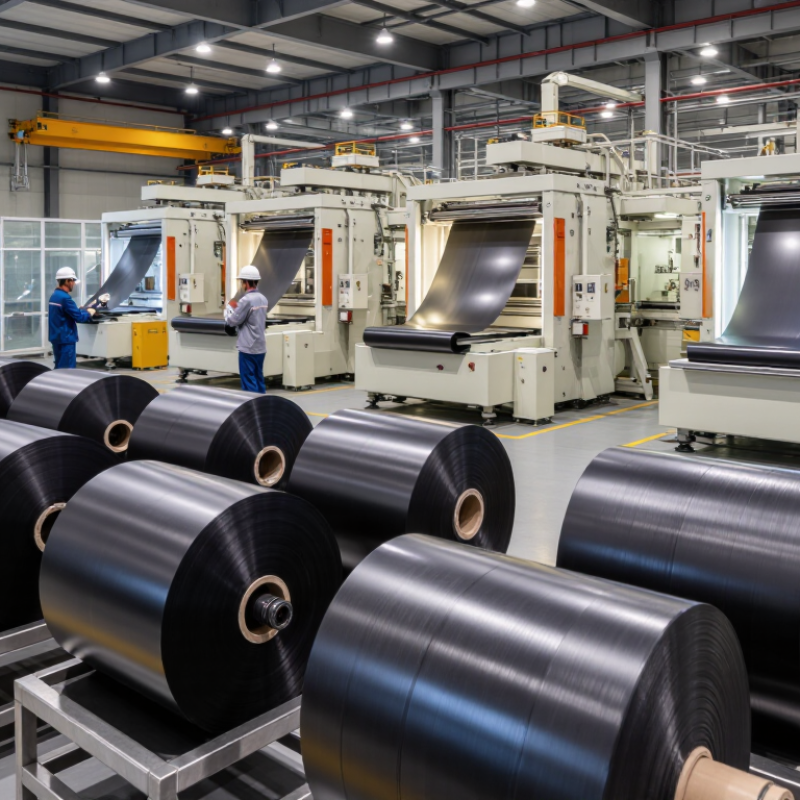
Best Carbon Fiber Products Manufacturer in China
Overview of Carbon Fiber Product Manufacturing in China
China’s carbon-fiber manufacturing chain spans precursor production, carbonization, surface treatment, and composite molding. Factories may turn fiber into woven cloth, prepreg, tubes, panels, or custom-molded parts. The process is precise. Small changes in fiber tension or curing temperature can affect a finished component’s strength and consistency. Buyers should assess not only equipment, but also batch traceability and test records.
Demand is shaped by several industries, including wind energy, transportation, and sports equipment. The Global Wind Energy Council’s Global Wind Report 2024 recorded 116.6 GW of new wind capacity worldwide in 2023, with 75.9 GW installed in China. This is useful market context, not a direct measure of carbon-fiber use; many turbine blades still rely on other materials. Manufacturing capacity alone therefore tells only part of the story. Quality data and application experience matter, too.
Tips: Ask for fiber-grade details, laminate test results, and sample parts made with the intended process. Check whether reported performance applies to the finished component—not just the raw fiber.
| Overview Dimension | Industry Information | Manufacturing Relevance |
|---|---|---|
| Common product forms | Carbon fiber products include prepreg laminates, fabric-reinforced parts, pultruded profiles, filament-wound tubes and pressure vessels, and molded components. | The appropriate form depends on part geometry, required strength, production volume, and whether the design needs continuous fibers in specific directions. |
| Reinforcement materials | Carbon fiber is supplied as continuous tow, woven or stitched fabric, and chopped fiber. Tow size and fiber grade vary by application. | Continuous fibers are suited to load-bearing parts; chopped fibers are more compatible with compound molding and complex shapes. |
| Matrix materials | Thermoset epoxy is widely used in structural composites. Other thermoset and thermoplastic matrices are also used, depending on processing and service requirements. | Matrix selection affects cure or forming conditions, toughness, chemical resistance, operating temperature, and repair options. |
| Typical manufacturing processes | Common processes include hand lay-up, vacuum bagging, autoclave curing, compression molding, resin transfer molding (RTM), pultrusion, and filament winding. | Autoclave processing can produce high-quality laminates; pultrusion suits constant cross-sections; filament winding suits tubular and vessel-shaped parts. |
| Fiber orientation | Unidirectional laminates place most fibers along one direction, while woven fabrics provide reinforcement in intersecting directions. Multiaxial lay-ups combine plies at different angles. | Orientation and stacking sequence are selected to match the expected load paths. A part’s performance cannot be inferred from fiber content alone. |
| Material density | Carbon fiber density is commonly around 1.75–1.95 g/cm³. Many carbon-fiber/epoxy laminates are approximately 1.5–1.6 g/cm³, depending on fiber and resin content. | Actual component weight depends on laminate design, resin content, voids, inserts, coatings, and hardware. |
| Mechanical properties | Carbon fiber grades vary substantially. Standard-modulus fibers commonly have tensile moduli around 230–250 GPa; higher-modulus grades are available. Fiber values are not the same as finished-laminate properties. | Finished-part strength and stiffness depend on fiber grade, orientation, lay-up, cure quality, geometry, and test method. Request laminate or component test data for design decisions. |
| Quality considerations | Key checks can include fiber orientation, dimensions, surface finish, laminate thickness, voids, cure condition, and mechanical properties. | Inspection methods may include visual checks, dimensional measurement, ultrasonic testing, and destructive testing, selected according to part requirements. |
| Testing references | ISO 527-4 and ISO 527-5 cover tensile properties of fiber-reinforced plastic composites. ASTM D3039/D3039M is a common tensile-test method for polymer-matrix composite materials. | Test results are meaningful when the specimen preparation, conditioning, orientation, and test method are reported alongside the values. |
| Supplier evaluation | For a China-based manufacturer, buyers commonly review process capability, material traceability, inspection records, sample results, production capacity, and export documentation. | Confirm that the supplier’s equipment and process match the part design, and agree on acceptance criteria and documentation before production. |
Note: Values shown are general reference ranges, not guaranteed specifications. Carbon-fiber composite properties vary by grade, resin system, fiber architecture, manufacturing process, and test conditions.