
2026 Best Industrial Tool Bag for Global Buyers

Choosing the 2026 best Industrial Tool Bag requires more than comparing pockets, fabric, and logos. Global buyers need evidence, field experience, and dependable specifications.

Grand View Research identifies tool storage as a growing market, supported by construction, maintenance, manufacturing, and mobile repair work. Its analysis also highlights demand for durable, organized, and portable storage solutions. However, market reports differ in scope and measurement. That limitation matters. A bag designed for a factory technician may fail on a dusty construction site.

Occupational Safety and Health Administration guidance emphasizes reducing manual-handling strain through better organization, load control, and safer carrying practices. An overloaded bag can pull against one shoulder, damage tools, and slow emergency repairs. The details become visible quickly: reinforced stitching at the handle, waterproof protection under a leaking truck roof, and wide compartments for gloves, meters, and impact drivers.

Dr. Alan Hedge, a respected ergonomics researcher, stated, “The best posture is the next posture.” His principle applies directly to Industrial Tool Bag selection. Frequent users should consider weight distribution, handle comfort, shoulder straps, and easy access before appearance. A professional buyer should also verify tested materials, warranty terms, replacement availability, and supplier consistency.

There is no perfect bag. Not yet.

This guide compares leading options for international procurement teams, distributors, contractors, and industrial service professionals. It examines capacity, construction quality, weather resistance, portability, safety features, and long-term value. Some conclusions remain practical rather than absolute. A compact bag may improve mobility, while a larger model may reduce repeated trips. The best choice depends on tools, workplace conditions, transport distance, and the user’s daily habits.
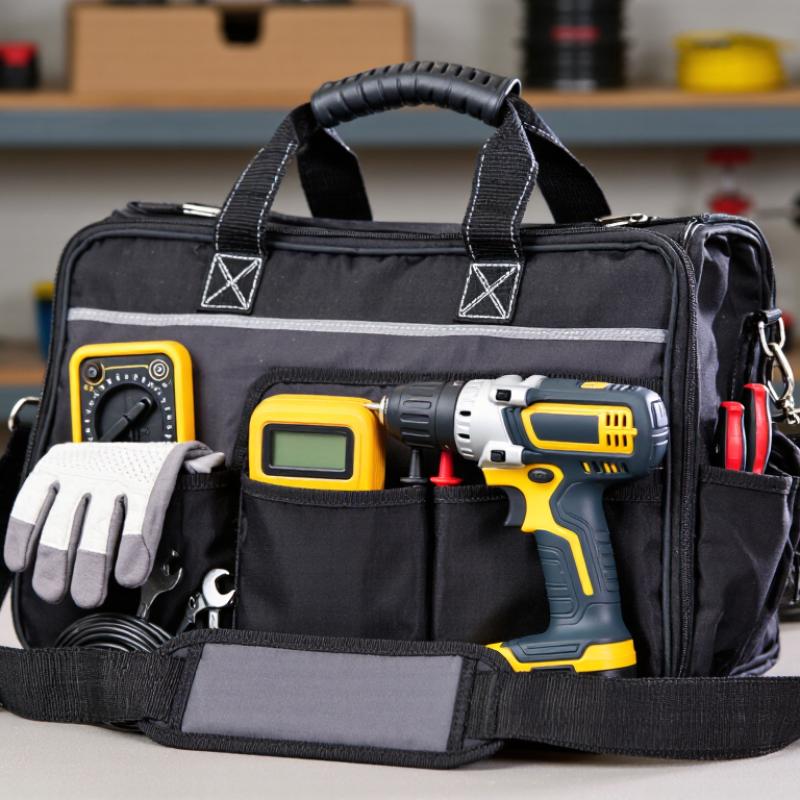
2026 Best Industrial Tool Bag for Global Buyers

What Defines an Industrial Tool Bag in 2026

What Defines an Industrial Tool Bag in 2026

An industrial tool bag now means more than rugged fabric and large capacity. It must protect tools, reduce carrying strain, and support fast access during demanding work. In field use, reinforced corners, waterproof bases, and corrosion-resistant zippers matter immediately. A broken zipper can stop a technician before the first repair begins.

Ergonomics is becoming central. The International Labour Organization reported that over 2.4 million workers die annually from work-related causes, while poor workplace design increases long-term physical stress. A balanced load, padded handles, and adjustable shoulder straps cannot solve every risk. They can reduce unnecessary movement. The 2024 Deloitte Smart Manufacturing and Operations Survey also showed that manufacturers continue investing in safer, more efficient operations. A tool bag should support that goal through clear compartments and dependable weight distribution. Bigger is not always better. I have found that unused depth often becomes wasted weight.

Tips: Test the bag with real tools, not empty hands. Check stitching, base stability, and handle comfort. Measure the loaded weight before purchase. Look for material specifications, load ratings, and test evidence. ANSI/ISEA 121-2018 is useful when selecting accessories for dropped-object control, but it does not certify every tool bag. Buyers should request current test documents from suppliers. Claims without evidence deserve questions.

Key Features Global Buyers Should Evaluate

Global buyers should evaluate an industrial tool bag by working conditions, not appearance. A reinforced base helps protect tools on wet concrete and uneven floors. Water-resistant fabric is useful, but sealed seams matter more. Check the denier rating, stitching density, zipper quality, and load-bearing handles. A bag should remain stable when placed beside machinery.

Weight and access also deserve careful review. EU-OSHA reported in 2020 that musculoskeletal complaints affected about three in five European workers. A poorly balanced bag can increase shoulder and lower-back strain during repeated lifting. Choose wide, padded straps, breathable back panels, and compartments that keep heavy tools close to the body. Tool storage should also prevent falling objects, consistent with OSHA requirements in 29 CFR 1910.176(b). More pockets are not always better. They can add weight and slow inspections.

Tips: Test the bag with a realistic load, including metal tools, meters, and small parts. Carry it for ten minutes. Notice pressure points. Inspect the base after repeated drops. Also verify chemical resistance, temperature limits, repair options, and regional import requirements. The Liberty Mutual Workplace Safety Index continues to place overexertion among costly workplace injury categories. That evidence supports lighter designs, although “lightweight” should not mean fragile. A stronger bag may cost more initially, but replacing damaged tools costs more.

2026 Best Industrial Tool Bag for Global Buyers - Key Features Global Buyers Should Evaluate

Evaluation Dimension Recommended Target for Industrial Use Why It Matters to Global Buyers Key Verification Method Priority
Load Capacity At least 15–25 kg for general industrial maintenance applications Helps prevent premature deformation, seam failure, and unsafe carrying conditions Request a documented static-load test and inspect the base, handles, and attachment points Critical
Fabric Durability Heavy-duty woven polyester or nylon with reinforced panels; commonly 600D or higher Improves resistance to abrasion, punctures, and repeated handling in workshops or field sites Confirm fabric denier, weave construction, coating, seam reinforcement, and abrasion-test results Critical
Base Protection Water-resistant molded or reinforced base with a raised floor structure Protects tools from wet floors, oil residue, dirt, and impact during placement Check material thickness, base height, edge coverage, stability, and water-resistance test results Critical
Storage Configuration A balanced combination of open compartments, tool loops, pockets, and secure zones Supports faster tool identification while reducing movement and internal damage Map the pocket layout against the actual tool list and measure usable internal volume High
Closure System Heavy-duty zipper, buckle, or roll-top closure matched to the work environment Keeps tools contained during transport and reduces exposure to dust and light moisture Operate the closure repeatedly and inspect teeth, sliders, hook-and-loop panels, and stitching High
Handle and Strap Ergonomics Padded carry handles plus an adjustable, removable shoulder strap where required Reduces hand and shoulder strain when technicians move equipment across large sites Check grip comfort, strap width, adjustment range, load distribution, and attachment security High
Moisture and Contamination Resistance Water-resistant outer fabric with protected seams; avoid treating “water-resistant” as fully waterproof Important for outdoor maintenance, construction, utilities, and transport between facilities Request spray or hydrostatic test details and verify the intended environmental rating High
Safety and Visibility Reflective accents, high-contrast interior, and secure storage for sharp tools Improves visibility in low-light areas and lowers the risk of loose tools causing injury Inspect reflective coverage, edge finishing, tool retention, and compatibility with site safety rules High
Empty Weight and Portability Typically keep the empty bag below approximately 2.5 kg unless specialized reinforcement is required Leaves more of the user’s carrying capacity available for tools and replacement parts Weigh production samples and compare the empty weight with the planned loaded weight Medium
Dimensions and Packing Efficiency Select dimensions that fit common storage, vehicle, pallet, and parcel-handling requirements Affects warehouse utilization, freight cost, container planning, and end-user portability Measure packed dimensions, volume, carton quantity, and dimensional-weight impact by destination Medium
Material Compliance Clear declaration of textile composition, coatings, restricted substances, and applicable market requirements Reduces customs delays, buyer compliance risk, and documentation gaps across different markets Request material declarations, test reports, safety data where applicable, and destination-specific documents Critical
Quality Consistency Defined inspection points for fabric, stitching, hardware, dimensions, color, and functional performance Consistent production is essential for repeat orders and multi-country distribution Use approved samples, inspection checklists, AQL-based procedures, and batch traceability records Critical
Customization Capability Optional changes to color, pocket layout, labeling, packaging, and identification features Allows distributors and industrial users to align the bag with job-specific or inventory-control needs Confirm minimum order quantities, sample approval process, tooling charges, and lead-time effects Medium
Packaging and Export Readiness Protective export packaging with accurate carton marks, product labels, and packing documentation Reduces transit damage and simplifies receiving, warehousing, and customs processing Review carton strength, moisture protection, labeling language, palletization, and shipping marks High
Lifecycle Value Evaluate total cost through durability, repairability, warranty terms, and replacement-part availability A lower purchase price may create higher replacement and service costs over time Compare landed cost, expected service life, defect policy, warranty coverage, and support response time Critical
Buyer’s note: Target values are practical screening benchmarks for industrial tool bags. Final specifications should be confirmed through samples, test reports, inspection records, and destination-market requirements.

Industrial Tool Bag Types for Different Work Environments

2026 Best Industrial Tool Bag for Global Buyers

Industrial Tool Bag Types for Different Work Environments

Industrial tool bags should match the workplace, not just the tool list. A field technician often needs a compact bag with padded compartments, a shoulder strap, and quick access. In contrast, construction crews usually need reinforced bases, wide openings, and strong handles. Dust, vibration, and rough flooring can damage weak stitching within weeks.

For electrical maintenance, organized pockets help separate testers, insulated hand tools, and small fasteners. A water-resistant fabric is useful in service areas, but it is not the same as waterproof protection. Warehouse workers may prefer a rolling tool bag that moves easily across concrete floors. Outdoor technicians need covered zippers, corrosion-resistant fittings, and bright interior lining.

Small details matter.

From practical inspections, I have found that overloaded bags fail faster than expected. Weight should stay balanced near the base. A bag that looks spacious can become uncomfortable when filled with drills and metal parts. I once selected a model with excellent capacity but poor shoulder support; the design seemed efficient, yet daily use became tiring. Buyers should check stitching, handle attachment points, base stability, and cleaning access before ordering. Regional climate also deserves attention, because heat, humidity, and cold can change material performance.

Materials, Durability, Storage, and Safety Standards

For global buyers, an industrial tool bag should begin with material selection, not appearance. 600D polyester suits moderate use, while 1680D fabric resists abrasion around steel shelving and concrete floors. A reinforced base helps prevent moisture entry. However, thick fabric alone proves little. Stitch density, bar-tacked stress points, zipper quality, and handle load testing matter more during daily transport. A small weakness can become a full failure.

Storage design should match real work. Wide openings improve visibility, while vertical pockets keep pliers, drivers, and meters separated. Internal dividers reduce tool movement and noise. NIOSH’s lifting equation uses a 51-pound load constant under ideal conditions, but actual work rarely stays ideal. A fully packed bag should remain manageable, even with awkward stairs, gloves, or cold weather. I would prefer fewer pockets over cramped storage.

Safety deserves direct attention. The U.S. Bureau of Labor Statistics recorded about 2.6 million nonfatal workplace injuries and illnesses in private industry during 2023. A secure closure, covered sharp tools, and balanced weight can reduce avoidable handling risks. For elevated work, buyers should review attachment systems against ANSI/ISEA 121-2018 dropped-object guidance; ordinary fabric loops are not automatically compliant. The ILO reported 2.93 million work-related deaths globally in 2023, reminding purchasers that small controls matter. Specifications can mislead. Independent testing is still necessary.

How to Compare Suppliers, Costs, and International Shipping

For global buyers, the best industrial tool bag is not always the cheapest. I compare suppliers through samples, factory records, and repeat communication. A serious supplier should explain fabric weight, stitching density, zipper quality, load testing, and replacement terms. Ask for dated photos and a sample made to the final specification. Vague answers create expensive surprises. I once accepted a low sample price and missed the cost of reinforced corners. That mistake still influences my buying checklist.

Compare quotations line by line, not by the final total alone. Separate tooling, packaging, inspection, payment fees, and inland transport. Request pricing at several quantities, such as 100, 500, and 1,000 units. Unit cost often falls, but storage costs rise. Calculate landed cost using product price, freight, insurance, duties, and destination handling. Confirm currency and quote validity. Numbers can look precise while assumptions remain hidden. Keep every revision in one file.

International shipping needs a practical plan. Choose air freight for urgent samples and sea freight for larger, slower orders. Check carton dimensions, gross weight, pallet limits, and estimated transit time before production. Confirm the delivery term and which party manages export documents, customs information, and final delivery. Use independent pre-shipment inspection when the order matters. It adds cost, but it may reveal weak seams or incorrect quantities. Still, inspections are not magic. Keep a small contingency for delays, damaged cartons, and changing freight rates. A cheap quote can become costly at the port.

2026 Best Industrial Tool Bag for Global Buyers

How to compare supplier cost, minimum order quantity, production lead time, and international shipping readiness.

The comparison uses practical buyer-planning benchmarks by sourcing region. Lower unit cost and shorter lead time can improve competitiveness, while smaller MOQs and stronger shipping readiness reduce inventory and logistics risk. Confirm final figures with suppliers using the same product specification, Incoterm, packaging details, and destination.