10 Best Golf Champions of All Time?
Choosing the 10 Best Golf Champions of All Time requires more than counting trophies. Golf rewards longevity, major victories, pressure control, and influence beyond the scorecard. A champion standing on the 18th green may reveal only one moment. The deeper story includes decades of travel, changing equipment, stronger fields, and difficult decisions under pressure.
The R&A’s Golf Around the World 2023 report recorded 66.6 million golfers across 206 countries. That global growth gives historical champions a broader context. Their achievements helped shape the sport watched by millions today. Official records from the PGA Tour, LPGA Tour, and major championship organizations provide useful evidence. Still, statistics do not settle every debate. Era comparisons remain imperfect.
Tiger Woods once said, “No matter how good you get, you can always get better.” That belief reflects the demanding mindset behind every elite golf champion. Woods’ 15 major titles, Jack Nicklaus’ record 18, and Annika Sörenstam’s sustained dominance show different forms of excellence. This list will examine those differences carefully. It will consider major wins, consistency, rivalries, innovation, and cultural impact. Some choices may feel debatable. They should. A historical ranking becomes stronger when readers question its assumptions. Even one missed era, course condition, or overlooked player can change the picture.
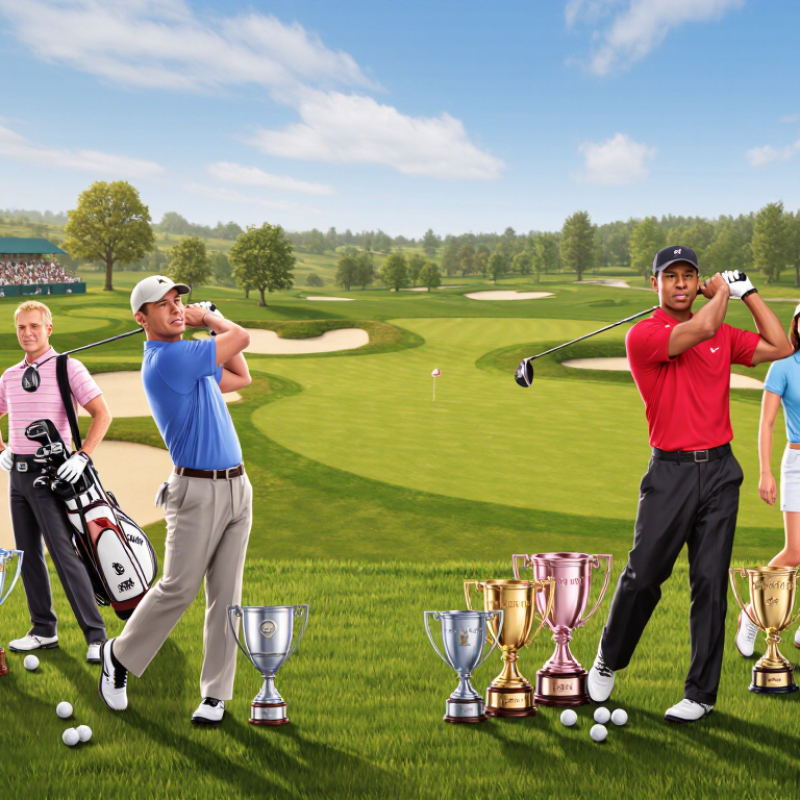
Defining the Greatest Golf Champions in History
10 Best Golf Champions of All Time?
Defining the greatest golf champions requires more than counting trophies. The official major championship record books credit Jack Nicklaus with 18 men’s major titles and Tiger Woods with 15. Walter Hagen follows with 11, while Ben Hogan and Gary Player each won nine. Those figures provide a firm foundation, not a final verdict. Greatness is not a clean spreadsheet.
Longevity, adaptability, and the quality of competition also matter. Historical data from the Official World Golf Ranking shows sustained excellence across multiple seasons, although its records begin only in 1986. That limitation makes earlier champions harder to compare fairly. The 2024 Golf Around the World report recorded 66.6 million golfers across 206 countries, revealing a broader modern talent pool. Champions competing today may face deeper fields, while earlier legends often mastered difficult courses with fewer technological advantages. Major records, scoring averages, winning margins, and performances under pressure should be assessed together. Even then, the comparison remains imperfect. Some careers were shortened by injury, war, or changing tournament schedules. A defensible top-ten list should acknowledge those gaps instead of pretending every era can be measured identically.
Criteria for Evaluating Golf’s All-Time Champions
The ten best golf champions should be judged through more than major victories. I would give major titles the strongest weight, because they test skill under severe pressure. Official major-championship records credit Jack Nicklaus with 18 professional major wins and Tiger Woods with 15. These figures provide a clear starting point, not a final answer.
Longevity should count for about 20 percent. A champion who performs across three decades shows unusual adaptability. Peak dominance deserves similar attention. Historical ranking archives can reveal sustained excellence, while modern strokes-gained reports measure driving, approach play, and putting with greater precision. The weakness is obvious. Shot-level data is unavailable for many earlier champions. Comparisons across eras remain imperfect.
Course versatility also matters. A complete champion should succeed on links layouts, tree-lined courses, and demanding major venues. Strength of field, winning margins, injury-adjusted seasons, and performance in final rounds can refine the ranking. Sportsmanship and influence deserve a smaller, carefully controlled share. They matter, but they should not overpower measurable results. My weighting may underrate pioneers who faced fewer international events. It may also favor modern players with richer statistical records. That problem cannot be fully solved. It should be acknowledged.
Profiles of the Ten Most Accomplished Golf Champions
10 Best Golf Champions of All Time?
Profiles of the Ten Most Accomplished Golf Champions
The greatest champions are measured by more than trophies. Official major-championship records identify ten golfers whose influence spans different eras. Jack Nicklaus leads with 18 major victories, while Tiger Woods follows with 15. Walter Hagen earned 11, combining bold shot-making with remarkable competitive confidence. Ben Hogan and Gary Player each collected nine majors. Their records appear in archives maintained by major governing bodies, including The R&A and the United States Golf Association.
Tom Watson won eight majors and nearly added more during a highly competitive period. Bobby Jones captured 13 major championships before retiring at 28, an unusual achievement shaped by amateur and professional events. Gene Sarazen, Sam Snead, and Arnold Palmer each won seven majors. Their profiles reveal different strengths: Sarazen’s invention, Snead’s athletic rhythm, and Palmer’s attacking courage. Historical ranking is imperfect, though.
Tournament depth has changed significantly. Equipment, travel, sports science, and global participation have expanded the challenge. The Official World Golf Ranking archive also shows how difficult sustained excellence became across international fields. Still, comparing eras can mislead us. Earlier champions played fewer events, while modern players face denser schedules and deeper preparation. That tension deserves attention. A champion’s legacy includes victories, longevity, adaptability, and the pressure absorbed on the final holes. Some records look untouchable. Others may reflect their time more than individual greatness.
10 Best Golf Champions of All Time
This chart ranks ten of golf’s most accomplished champions by their total victories in the four recognized men's major championships.
Major Victories, Records, and Playing Styles Compared
10 Best Golf Champions of All Time?
A credible top ten begins with major victories. Official championship archives credit Jack Nicklaus with 18 professional majors, followed by Tiger Woods with 15. Walter Hagen won 11, while Ben Hogan and Gary Player each claimed nine. Tom Watson earned eight, and Gene Sarazen and Sam Snead won seven apiece. Bobby Jones captured seven professional majors and 13 total majors, including amateur events. Phil Mickelson completes this group with six professional major victories. These numbers are powerful, but they are not perfectly equal. Course conditions, tournament fields, and equipment changed dramatically across generations.
Their playing styles make the comparison more revealing. Nicklaus paired a high, controlled ball flight with exceptional course management. Woods combined explosive driving with precise recovery shots and intense pressure play. Hogan built his success around repeatable ball-striking, while Player relied on fitness, discipline, and a fearless competitive rhythm. Watson excelled through touch, imagination, and links-course adaptability. The R&A and USGA Distance Insights Report (2021) explains that technology, athlete development, and course setup affect distance comparisons. Records need context.
Tips: Compare major wins with era strength, not totals alone. Study driving, approach play, short-game skill, and putting separately. Watch the old footage. It exposes weaknesses too. A champion’s statistics may look complete, yet every legend carried a vulnerable part of the game.
Influence and Legacy of the Golfing Greats
10 Best Golf Champions of All Time?
Influence and Legacy of the Golfing Greats
Golf history is shaped by more than trophies. Bobby Jones brought amateur excellence, while Ben Hogan showed how discipline could rebuild a career after tragedy. Sam Snead and Byron Nelson refined consistency. Their swings still appear in coaching rooms, often through slow-motion analysis and worn practice notes.
Jack Nicklaus set a major-championship standard with 18 professional major victories. Tiger Woods changed global attention, winning 15 majors and inspiring younger players across continents. Arnold Palmer made golf feel welcoming beyond private clubs. Gary Player helped carry the game worldwide. Tom Watson represented strategic control, especially in difficult conditions. Annika Sörenstam expanded the visibility of women’s golf through sustained elite performance. Se Ri Pak influenced a generation of South Korean professionals.
The R&A’s Golf Around the World 2023 report recorded 66.6 million golfers across 206 countries. That participation suggests these champions left more than memories; they helped widen golf’s cultural reach. The USGA’s Distance Insights research also shows how equipment, athlete development, and course strategy continue to reshape performance. Still, influence is difficult to measure. Television audiences, junior enrollment, coaching practices, and social change rarely fit one statistic. Palmer’s warmth may have mattered as much as his victories. Woods’ impact may also carry pressure, controversy, and unrealistic expectations. Legacy is not perfectly clean. It is debated, revised, and sometimes misunderstood.
10 Best Golf Champions of All Time? - Influence and Legacy of the Golfing Greats
| Rank |
Champion |
Playing Era |
Major Titles |
Defining Achievement |
Influence and Legacy |
| 1 |
Jack Nicklaus |
1960s–1980s |
18 |
Won a record 18 professional major championships, including five Masters Tournaments. |
Set the modern standard for major-championship excellence and became one of golf’s most influential course designers and mentors. |
| 2 |
Tiger Woods |
1990s–2020s |
15 |
Won all four professional majors and completed the career Grand Slam three times. |
Transformed the athletic profile, global visibility, and commercial reach of professional golf while producing one of its most dominant competitive peaks. |
| 3 |
Walter Hagen |
1910s–1930s |
11 |
Captured five PGA Championships and four Open Championships during golf’s formative professional era. |
Helped establish the professional golfer as a respected sporting figure and raised the public profile of tournament golf. |
| 4 |
Ben Hogan |
1930s–1950s |
9 |
Won the Masters, U.S. Open, and Open Championship in 1953, one of the greatest seasons in golf history. |
Defined precision ball-striking and demonstrated extraordinary resilience by returning to elite competition after a life-threatening car accident. |
| 5 |
Gary Player |
1950s–2000s |
9 |
Completed the career Grand Slam and became one of the first truly global golf champions. |
Popularized international competition, promoted fitness in golf, and inspired generations through worldwide participation and charitable work. |
| 6 |
Bobby Jones |
1920s–1930 |
13 |
Won the original single-season Grand Slam in 1930, taking all four major championships of his era. |
Remains the greatest amateur champion in golf history and helped shape the traditions and architecture of modern championship golf. |
| 7 |
Tom Watson |
1970s–2010s |
8 |
Won five Open Championships and twice captured the Masters Tournament. |
Became one of the era’s finest links golfers and is remembered for strategic intelligence, composure, and remarkable longevity. |
| 8 |
Arnold Palmer |
1950s–2000s |
7 |
Won seven major championships, including four Masters Tournaments. |
The charismatic “King” brought millions of new spectators to golf and played a central role in the sport’s television-era expansion. |
| 9 |
Sam Snead |
1930s–1980s |
7 |
Won seven major championships and achieved a record 82 official victories on the leading U.S. professional tour. |
Combined exceptional athleticism, a fluid swing, and extraordinary longevity, making him a model of natural efficiency and consistency. |
| 10 |
Gene Sarazen |
1920s–1970s |
7 |
Completed the career Grand Slam and invented the modern sand wedge, a major development in short-game technique. |
Influenced both golf equipment and instruction while remaining a prominent ambassador for the sport across several generations. |